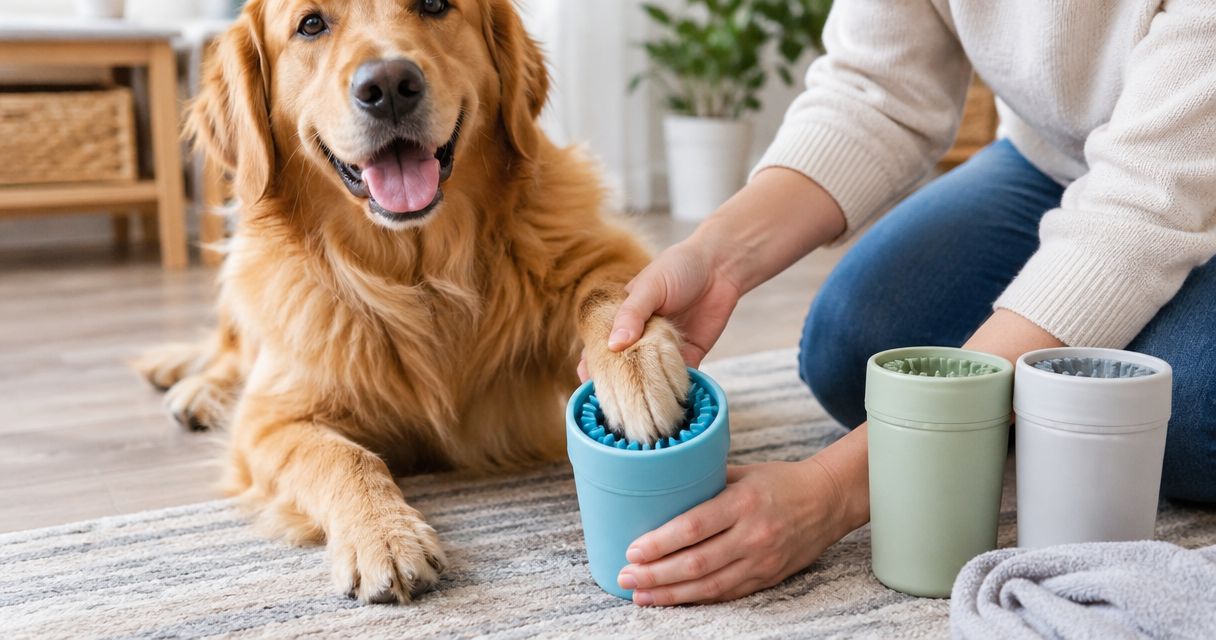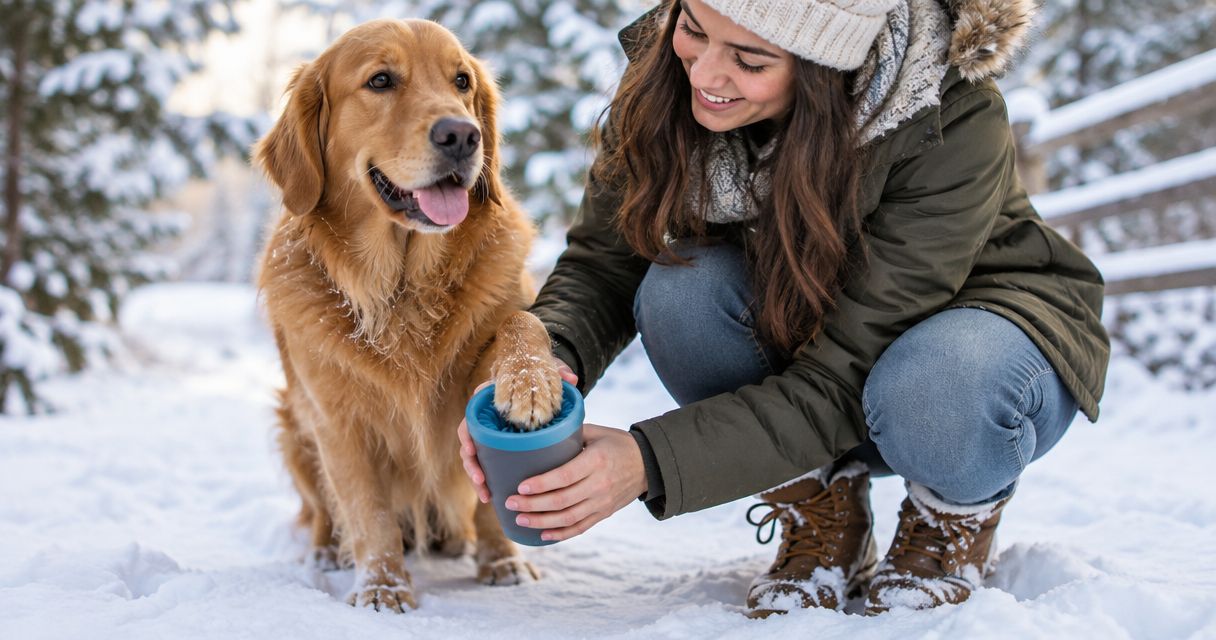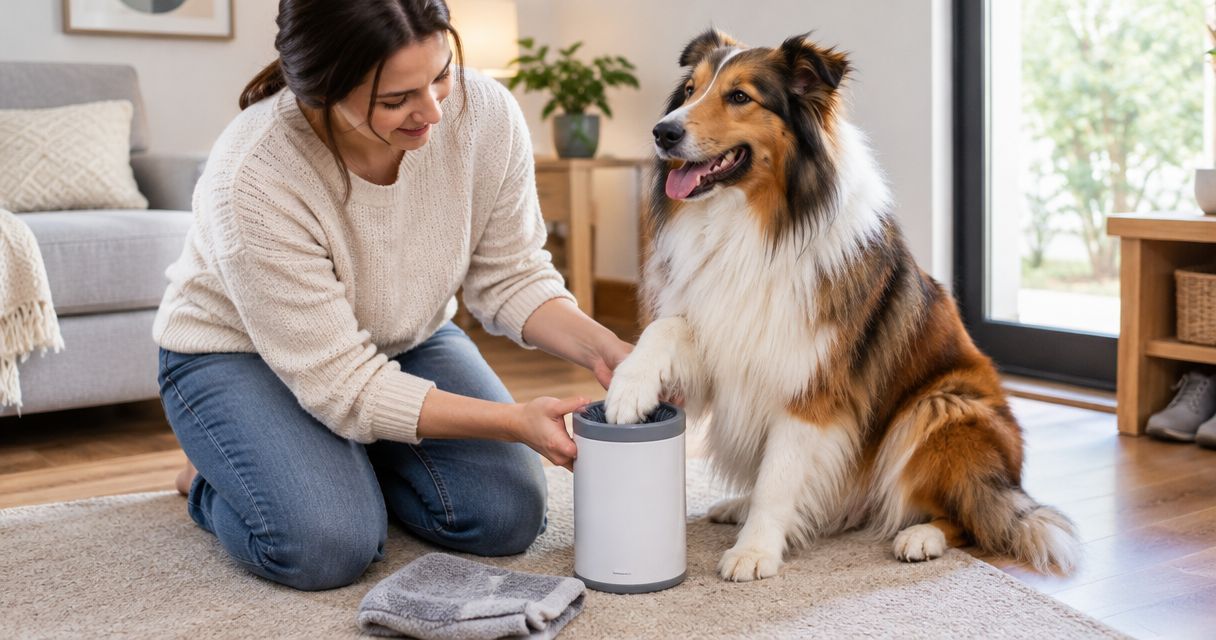
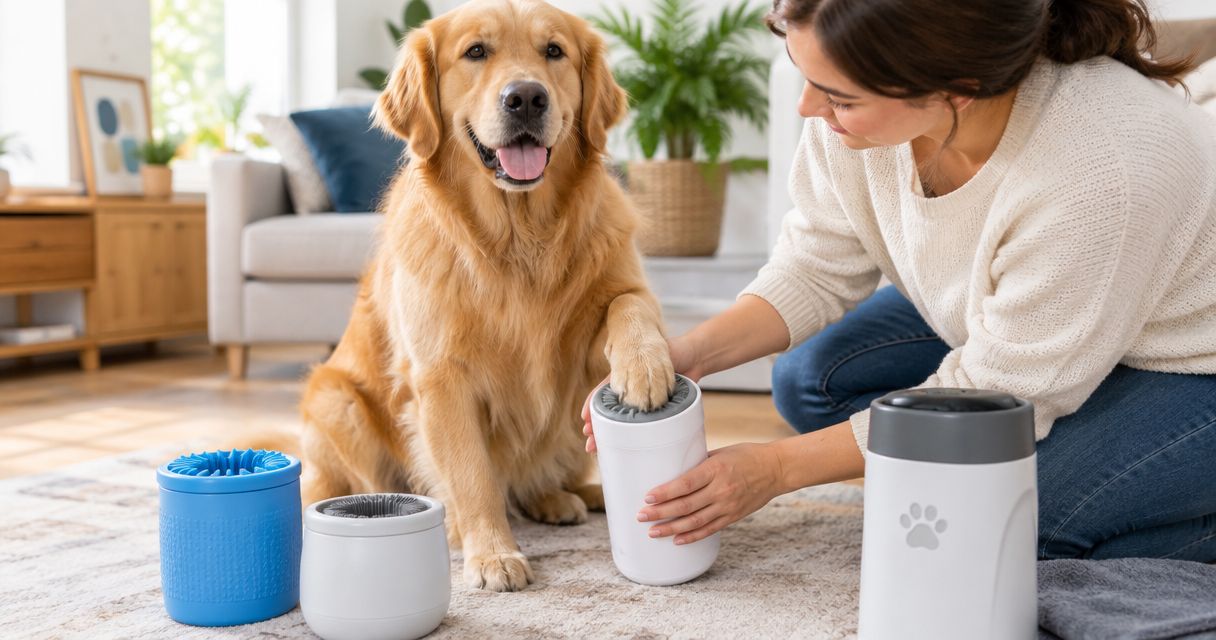
Best overall for washing the cleaner itself: an open bowl. Best for accessible scrubbing surfaces: a removable-insert paw-cleaner cup. Best for light dirt: a washable cloth. This 2026 guide ranks cleaning designs, separating the work of washing your dog’s paws from the work of cleaning the equipment afterward.
- Dog paw cleaners ranked by ease of cleaning: open bowls lead because their interior surfaces are directly accessible.
- Removable-insert paw-cleaner cups suit owners who want scrubbing surfaces they can inspect separately.
- Wags & Friends lists a Dog Paw Cleaner; confirm its construction and care instructions before choosing it.
- Choose by cleanup access, paw fit, and drying needs—not promises of completely mud-free floors.
Why this matters
A cleaner can help with muddy paws yet leave you washing bristles, threads, seals, and several loose pieces. Judge the whole routine, not just the moment your dog’s paw comes out.
Wags & Friends lists a Dog Paw Cleaner, but its supplied description does not establish whether the cleaning surface detaches or how it should be washed. Those details determine its place in an ease-of-cleaning comparison.
This 2026 ranking compares designs rather than claiming tested results for individual products. An open bowl wins on access to its interior; a removable-insert cup offers a different advantage when you want a dedicated scrubbing surface.
What makes the best easy-clean dog paw cleaner?
Use these criteria before choosing a design:
- Interior access: Can you see and reach every surface that touches dirty water?
- Disassembly: Can you separate dirty components without awkward tools or hidden fasteners?
- Debris removal: Can you reach trapped hair and grit rather than rinse around them?
- Drying access: Can washed surfaces remain exposed until dry?
- Care instructions: Does the manufacturer explain washing, reassembly, and any electrical restrictions?
- Paw fit: Can your dog comfortably place and withdraw a paw without forcing it?
Cleaning access takes priority in this ranking. Paw fit remains a purchase requirement: easy equipment cleanup does not compensate for a cleaner your dog resists using.
Dog paw cleaners ranked by ease of cleaning: at a glance
| Rank and design | Best for | Standout cleaning feature | Key limitation |
|---|---|---|---|
| 1. Open bowl | Direct access for rinsing and wiping | Exposed interior with no built-in bristle insert | Requires hands-on paw washing and spill management |
| 2. Removable-insert cup | Inspecting scrubbing surfaces | Insert and container can be examined separately | Adds disassembly and reassembly |
| 3. Washable cloth | Wiping away light surface dirt | No rigid chamber or mechanism to clean | Transfers the cleanup task to laundry |
| 4. Fixed-bristle cup | Keeping components together | No separate insert to misplace | Attached bristles restrict access around their bases |
| 5. Powered cleaner | Assisted cleaning motion | Motor-driven action on models designed for it | Electrical components complicate washing instructions |
The table ranks access and maintenance burden, not mud-removal performance. Construction varies within each category, so check the actual product rather than assuming every cup or powered cleaner works alike.
1. Open bowl: best paw-cleaning option for direct wash access
An open bowl holds rinse water while you clean your dog’s paw by hand. Its main advantage is straightforward: you can see and reach the interior without removing a bristle liner.
Choose a stable vessel with an opening that comfortably accommodates the paw. Keep your dog’s drinking bowl separate from dirty paw-washing water.
Open bowl pros:
- The interior is exposed for inspection.
- No built-in bristles hide hair at their bases.
- No insert requires removal and refitting.
Open bowl cons:
- You do the paw washing manually.
- An open water surface needs careful handling around an active dog.
- A bowl does not provide a dedicated scrubbing liner.
Best for: Owners who prioritize easy equipment cleanup and accept a hands-on washing routine.
For 2026, the open bowl is the default recommendation when cleaning the equipment matters most. Choose a simple shape rather than decorative grooves that create extra surfaces to wash.
Verdict: Buy a dedicated open bowl if direct cleaning access is your priority.
2. Removable-insert cup: best paw cleaner for accessible scrubbing
A removable-insert cup separates the scrubbing surface from its outer container. That separation lets you inspect both pieces instead of trying to clean everything through the opening.
Compare construction in the guide to dog paw cleaner cups, then check whether the particular model’s insert actually comes out. A cup-shaped exterior alone tells you nothing about disassembly.
Removable-insert cup pros:
- You can inspect the insert separately.
- Removing the liner exposes the container beneath it.
- Separate components can remain apart while drying.
Removable-insert cup cons:
- Each use adds a take-apart and reassembly task.
- Bristle bases still require attention.
- Extra rings or lids create additional pieces to clean.
Best for: Owners who want a scrubbing cup and will wash its components separately.
Before buying, look for explicit removal and care directions. Do not assume a soft-looking insert is dishwasher-safe, reversible, or removable unless the manufacturer says so.
Verdict: Buy a removable-insert cup when the listing clearly explains disassembly and care.
3. Washable cloth: best paw-cleaning option for light surface dirt
A damp washable cloth lets you wipe a paw without placing it inside a container. It is an option for surface dirt when a water-filled cleaner would add unnecessary setup.
The equipment is simple, but cleanup has not disappeared. A dirty cloth needs washing and drying before reuse.
Washable cloth pros:
- No chamber needs emptying.
- No bristle assembly needs disassembly.
- You can inspect the cloth’s wiping surface directly.
Washable cloth cons:
- Dirt and moisture move into your laundry routine.
- A cloth needs clean sections as wiping continues.
- Packed mud requires more than a quick surface wipe.
Best for: Owners handling light dirt who prefer wiping to a container-based routine.
Keep 2 towels at your station: one for the cleanup task and one clean, dry towel for finishing. This is a practical setup choice, not a performance requirement or a claim that every dog needs the same amount of drying.
Verdict: Buy washable cloths for light cleanup; skip them as your only answer to packed mud.
4. Fixed-bristle cup: best paw cleaner for keeping pieces together
A fixed-bristle cup keeps its scrubbing surface attached during cleaning. That avoids handling a separate insert, but it also limits how directly you can reach the spaces behind and around the bristles.
Inspect the opening and bristle arrangement before choosing one. The relevant question is whether you can wash the dirty surfaces, not whether the outside looks compact.
Fixed-bristle cup pros:
- No removable liner needs refitting.
- The scrubbing surface stays with the container.
- There are fewer separate components to track than in a multipart equivalent.
Fixed-bristle cup cons:
- Attached bristles restrict access around their bases.
- The opening limits how you inspect the interior.
- Trapped debris can require targeted cleaning.
Best for: Owners who value keeping components together and can verify adequate interior access.
For a 2026 purchase, favor visible care instructions over an easy-clean label. A demonstration of water being poured out does not show whether hair remains around the bristles.
Verdict: Hold until you can confirm how the fixed cleaning surface is washed.
5. Powered cleaner: best paw cleaner for assisted motion
Powered paw cleaners use electrical assistance for a cleaning action. The exact mechanism and washable components depend on the model, so a powered label does not establish cleaning convenience.
Separate ease of operating the device from ease of maintaining it. A motorized action is not evidence that the housing, controls, or charging connection can be immersed.
Powered cleaner pros:
- Assisted motion is an option for owners seeking that function.
- Models with detachable washable parts offer separate cleaning access.
- Written component-specific instructions can define the maintenance routine.
Powered cleaner cons:
- Electrical components require care beyond an ordinary bowl.
- Cleaning instructions must distinguish washable and nonwashable parts.
- Controls and connections add areas to inspect before washing.
Best for: Owners specifically seeking assisted motion and willing to follow model-specific care instructions.
Do not choose a powered cleaner merely because it sounds like less work. Read the cleaning procedure first and decide whether that procedure fits your routine.
Verdict: Skip powered designs if your main goal is the simplest equipment cleanup.
How this ranking works
This 2026 ranking uses visible design characteristics: access, disassembly, debris removal, drying access, and care requirements. It does not report timed cleaning trials or measured differences in dirt removal.
The order favors directly accessible surfaces over enclosed cleaning assemblies. A particular product can change the decision if its construction provides better access than its category suggests.
Wags & Friends’ dog paw cleaner belongs in your comparison only after you confirm its specific construction. The supplied listing supports its intended purpose, not a claim about removable parts, cleaning speed, or guaranteed dry floors.
A cleanup routine that keeps the decision practical
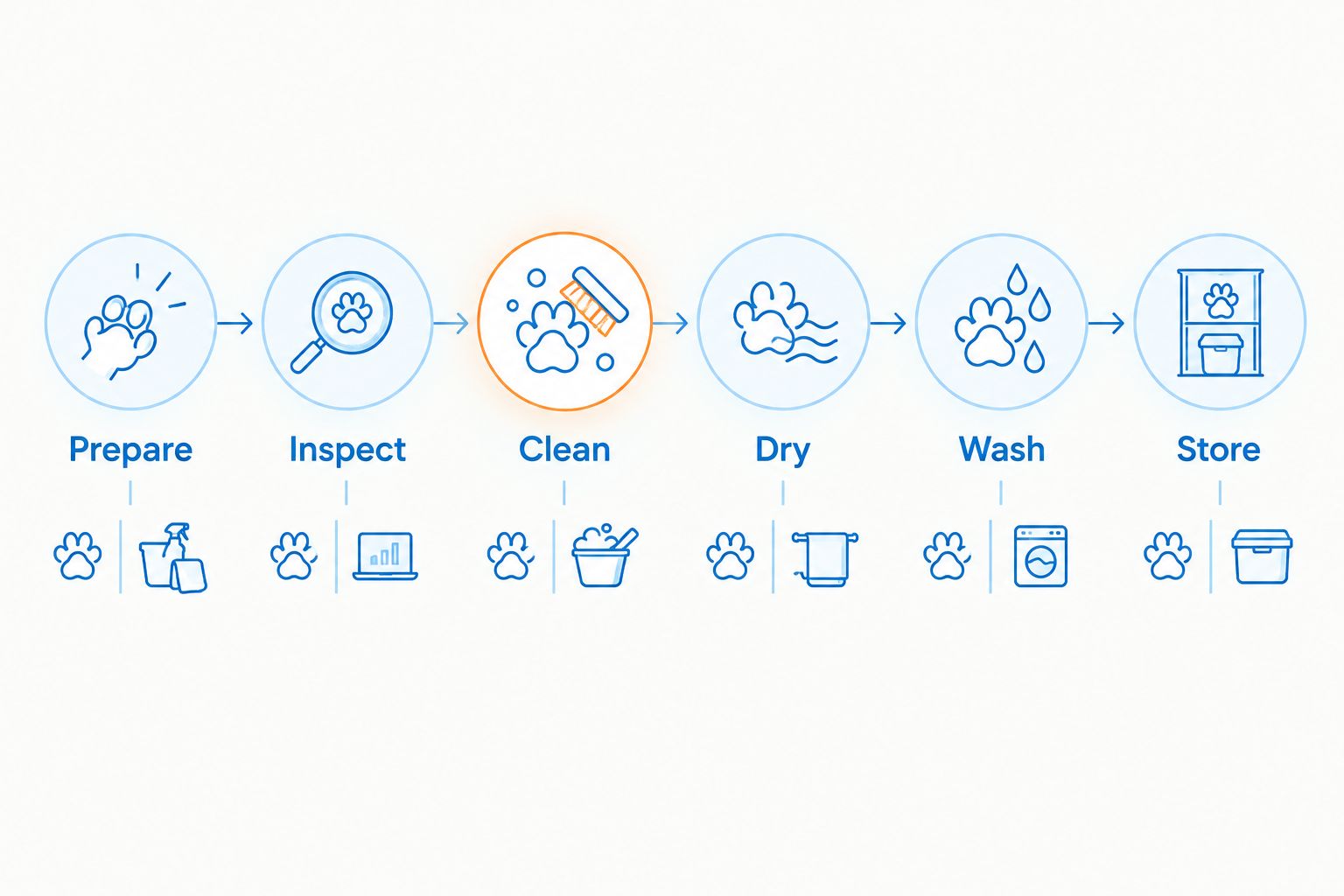
Use the same sequence when evaluating any design. Work with 1 paw at a time rather than trying to hold several paws or rush an unsettled dog.
- Prepare: Put the cleaner, clean water, and drying towel within reach on a stable surface.
- Inspect: Look at the paw before washing. Stop if handling causes pain or you notice a wound that needs veterinary attention.
- Clean: Follow the cleaner’s instructions without forcing the paw into a tight opening.
- Dry: Gently towel the paw before your dog steps away.
- Wash: Empty dirty water and clean the equipment according to its care directions.
- Store: Leave washed components exposed until dry before putting them away.
Keep the paw-cleaning station separate from your dog’s drinking water. A water bowl addresses drinking; a paw cleaner handles dirty rinse water. Neither replaces drying the paw before your dog walks across the floor.
Which paw-cleaning option should you choose?
Choose an open bowl for the simplest access during equipment washing. Choose a removable-insert cup when you want a scrubbing surface you can inspect separately.
Use a cloth for light dirt. Treat fixed-bristle and powered designs as purchases that require closer attention to care instructions, not automatic upgrades.
Before choosing Wags & Friends’ dog paw cleaner, confirm paw fit, removable components, and washing directions. That short check is more useful than relying on a broad promise about muddy floors.
FAQ
What's the easiest dog paw cleaner to wash afterward?
An open bowl provides the most direct access to its interior. It avoids a built-in bristle assembly, although you still need to wash the bowl and dry your dog's paw.
Is a removable paw-cleaner insert better than fixed bristles?
A removable insert is better for inspecting separated surfaces. It also adds disassembly and reassembly, so check whether that trade-off suits your routine.
Can I put a dog paw cleaner in the dishwasher?
Use a dishwasher only when the manufacturer explicitly permits it. Check the directions for every component rather than assuming the whole cleaner has the same care requirements.
Does Wags & Friends' Dog Paw Cleaner have a removable insert?
The supplied product description does not establish whether the insert is removable. Confirm the construction and washing instructions before choosing it for easy cleanup.
Are paw-cleaning cloths enough after a muddy walk?
A cloth suits light surface dirt better than packed mud. Inspect the paw and use a washing approach that lets you remove the dirt without forceful rubbing.
Are electric dog paw cleaners easier to clean?
Electrical assistance does not establish easier equipment cleanup. Check which parts detach, which parts can be washed, and how the electrical housing must be maintained.
How do I keep wet paw prints off the floor?
Dry each washed paw before your dog walks away. Keep a clean towel ready, and do not treat a paw cleaner as a guarantee against wet floors.
One last thing
Before your next purchase in 2026, read the cleaning instructions as if the cleaner were already full of muddy water. If you cannot explain how you would reach its dirty surfaces and leave them to dry, choose a simpler design.