Best overall approach: a correctly fitted paw-cleaning cup. Best for dogs that dislike cups: a shallow rinse basin. Best simple option for light dirt: a damp cloth. This 2026 guide to the best dog paw cleaners for large dogs explains how to choose between these options and portable paw wipes without buying something your dog cannot comfortably use.
- The best dog paw cleaners for large dogs fit the paw comfortably and suit the dirt you need to remove.
- Choose a paw-cleaning cup for routine muddy walks; check the usable opening before buying.
- Use a shallow rinse basin for cup-averse dogs and a damp cloth for light surface dirt.
- Consider Wags & Friends’ Dog Paw Cleaner only after confirming its dimensions suit your large dog.
Why this matters
A large dog needs more than a cleaner labeled for dogs. Paw width, willingness to stand still, and the kind of dirt on your walking route determine whether cleanup stays manageable.
Wags & Friends lists a Dog Paw Cleaner, but a product name alone does not establish large-dog fit. Treat the Dog Paw Cleaner as a fit-check candidate, not a confirmed large-paw recommendation.
For your 2026 buying decision, start with the cleanup method. Then check the individual product rather than assuming every cup, cloth, or wipe works equally well.
What makes the best paw cleaner for a large dog?
Use these criteria before comparing products. An awkward fit or difficult cleaning routine matters more than an appealing product photo.
- Comfortable access: Your dog's paw should enter and leave without forcing, squeezing, or catching the nails.
- Dog acceptance: Choose a method your dog can approach calmly. A cup is not useful if your dog repeatedly pulls away.
- Dirt removal: Match the method to loose dust, sticky mud, or dirt caught around the toes.
- Easy maintenance: Check how you empty, wash, rinse, and dry every part that touches dirty water.
- Controlled setup: Leave room for your dog to stand securely, and keep a towel within reach.
- Clear specifications: Look for usable internal measurements and care instructions, not just a general size label.
Large-dog paw cleaners at a glance
These rankings compare cleanup methods, not laboratory-tested products. The order reflects a practical decision: start with a fitted cup for routine mud, then choose another method when your dog's behavior or the cleanup location calls for it.
| Rank and option | Best for | Useful feature of the method | Key limitation |
|---|---|---|---|
| Paw-cleaning cup | Routine muddy walks | Contains the rinse around an individual paw | Fit and handling tolerance need checking |
| Shallow rinse basin | Dogs that dislike enclosed cups | Open access to the paw during rinsing | Requires space and water cleanup |
| Damp cloth | Light surface dirt | Lets you wipe specific dirty areas | Needs repeated rinsing for muddy paws |
| Dog paw wipes | Cleanup away from home | Works without a separate rinse container | Ingredients, instructions, and disposal matter |
1. Paw-cleaning cup: best for routine muddy walks
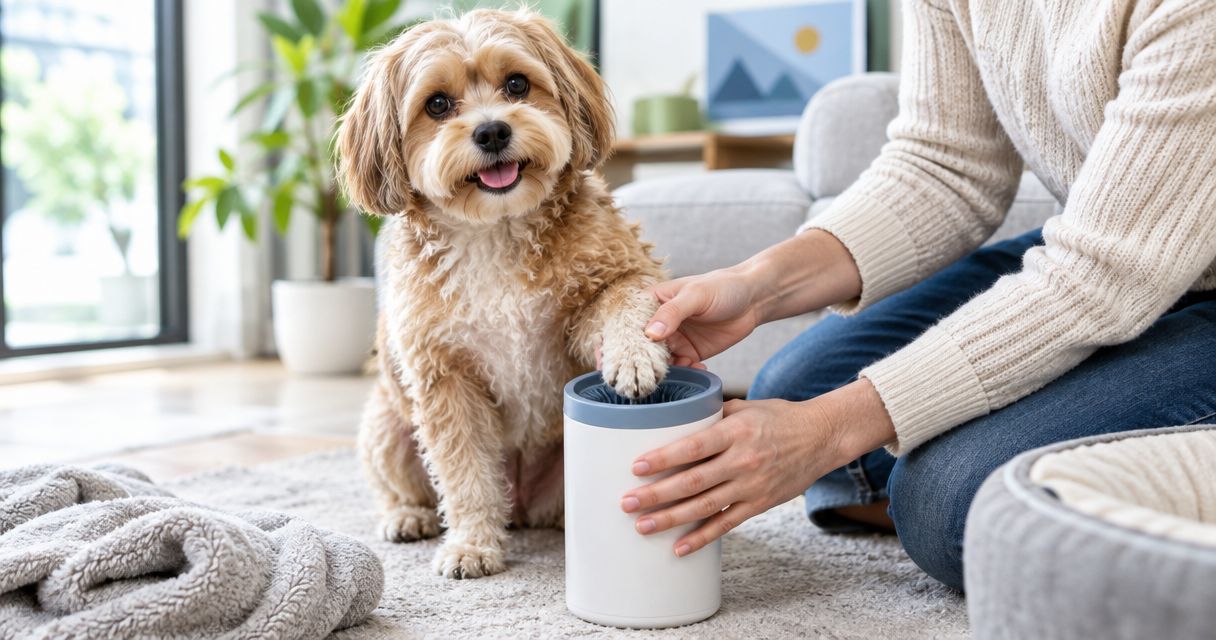
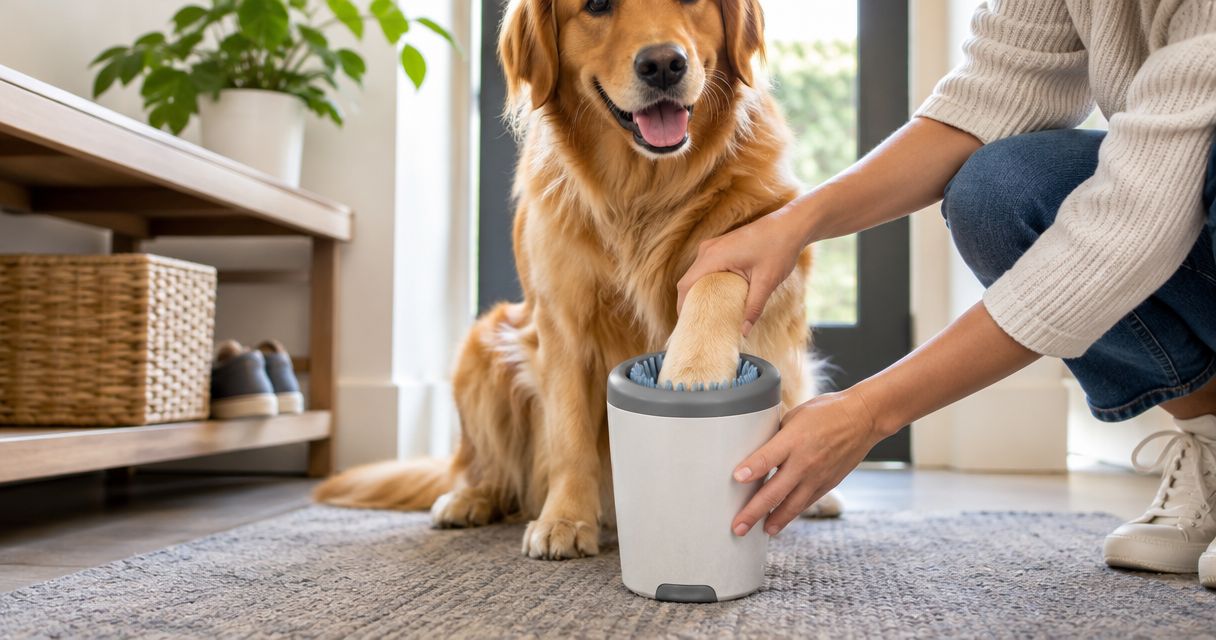
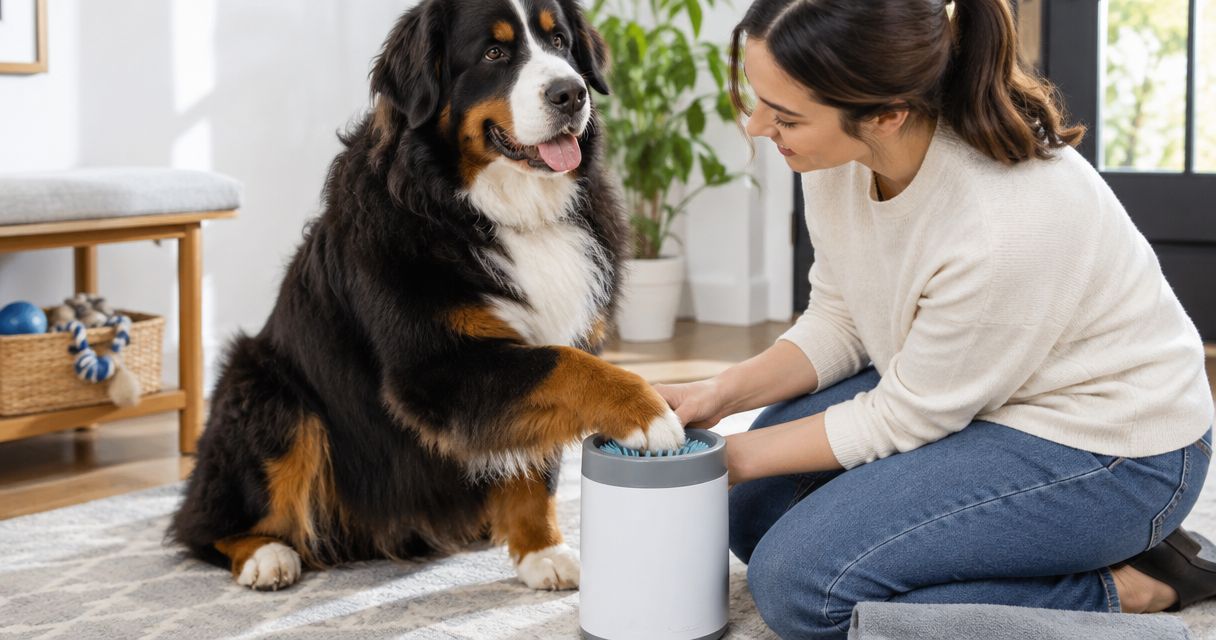
A paw-cleaning cup holds water around an individual paw during cleaning. Designs differ, so check the opening, internal space, and cleaning instructions for the exact model rather than assuming a particular lining or mechanism.
Best for: a large dog that accepts having a paw placed inside a container. The main buying question is comfortable access, not whether the listing simply says “large.”
The Wags & Friends Dog Paw Cleaner belongs on your shopping checklist as a named paw-cleaning product. Before selecting it for a large dog, confirm its usable opening, internal dimensions, and care instructions; do not assume a particular material, removable insert, or cleaning mechanism.
Paw-cleaning cup pros:
- Keeps the rinse localized around the paw being cleaned.
- Gives you a defined place to perform each rinse.
- Can form part of a repeatable doorway cleanup routine.
Paw-cleaning cup cons:
- An unsuitable opening makes insertion and removal awkward.
- A dog that dislikes enclosed handling can resist the process.
- The container itself needs cleaning after use.
Ask how the paw enters and exits, not just how it sits inside. Nails, fur, and the angle of your dog's leg all deserve attention when you assess fit.
Verdict: Buy a paw-cleaning cup only after confirming comfortable fit and handling acceptance.
2. Shallow rinse basin: best for dogs that dislike cups
A shallow basin provides an open place to rinse a dirty paw. You can use a clean container suited to the task rather than choosing an enclosed cleaner.
Best for: a large dog that tolerates gentle wiping or rinsing but objects to a cup. Open access lets you see the paw while working, although it does not remove the need for calm handling.
Shallow rinse basin pros:
- Leaves the paw visible during cleanup.
- Allows you to combine rinsing with a clean cloth.
- Avoids the opening-size constraint of an enclosed cup.
Shallow rinse basin cons:
- Takes up more floor space than a hand-held cloth.
- A moving dog can splash or step outside the setup.
- You still need to empty and wash the container.
Place the basin where your dog can stand securely. Do not lift or pull a leg into an awkward position to reach it, and change dirty rinse water rather than repeatedly using it on the remaining paws.
Verdict: Buy a suitable basin when open access makes cleanup easier for your dog.
3. Damp cloth: best for light surface dirt
A damp cloth lets you wipe dirt from specific areas without putting the paw inside a cleaner. It is a straightforward starting point when your dog returns with dusty paws rather than clumps of mud.
Best for: quick cleanup after a lightly dirty walk. You control where the cloth touches and can pause immediately if your dog pulls away.
Damp cloth pros:
- Targets visible dirt without an enclosed container.
- Fits easily into an existing towel-and-water routine.
- Lets you inspect the paw as you wipe.
Damp cloth cons:
- A dirty cloth needs rinsing or replacing during cleanup.
- Thick mud calls for more rinsing than a quick wipe.
- Repeated rubbing is not a substitute for gently loosening dirt.
Keep the cloth used for cleaning separate from the towel used for drying. With 2 towels, you can reserve one for the damp cleanup and one for the finish instead of wiping a clean paw with the dirty section again.
Do not scrub stubborn material aggressively. Stop if the paw appears sore or your dog reacts as though touching it hurts.
Verdict: Buy or set aside washable cloths for light dirt; skip cloth-only cleanup when mud needs rinsing away.
4. Dog paw wipes: best for cleanup away from home
Dog paw wipes provide a portable wiping method when a water container is impractical. Choose a product labeled for dogs and follow its directions, including any instructions about rinsing or avoiding certain areas.
Best for: a limited cleanup before your dog gets back into the car or enters someone else's home. Wipes are a convenience option, not an automatic replacement for rinsing muddy paws.
Dog paw wipes pros:
- Travel without a separate cleaning basin.
- Let you address a small dirty area directly.
- Offer a simple backup when your usual setup is elsewhere.
Dog paw wipes cons:
- Create disposable waste.
- Require checking the ingredients and use instructions.
- Are awkward for removing substantial clumps of mud.
Do not substitute household surface-cleaning wipes. Select a dog-appropriate product, keep the package closed as directed, and stop using it if you notice irritation.
Verdict: Buy dog paw wipes as a travel backup; skip them as your only plan for heavy mud.
Check large-paw fit before buying in 2026
Do not choose a cup from breed name or body weight alone. Compare your own dog's paw with the product's usable internal measurements, following the seller's measuring instructions when provided.
Check these details before ordering:
- Paw width: Measure the paw while your dog stands naturally, without pressing the toes together.
- Usable opening: Compare the opening your dog's paw passes through, not just the container's outside width.
- Internal space: Check whether any lining or insert reduces the room inside.
- Easy removal: Consider how the nails and fur will pass back through the opening.
- Care instructions: Confirm how the cleaner comes apart, if it does, and how each part should be washed.
If dimensions are unclear, ask for them before choosing. Wags & Friends’ Dog Paw Cleaner should pass the same checks as any other paw-cleaning cup you consider.
A size label is a starting point. Comfortable entry and removal are the deciding factors.
Build a doorway routine you can repeat
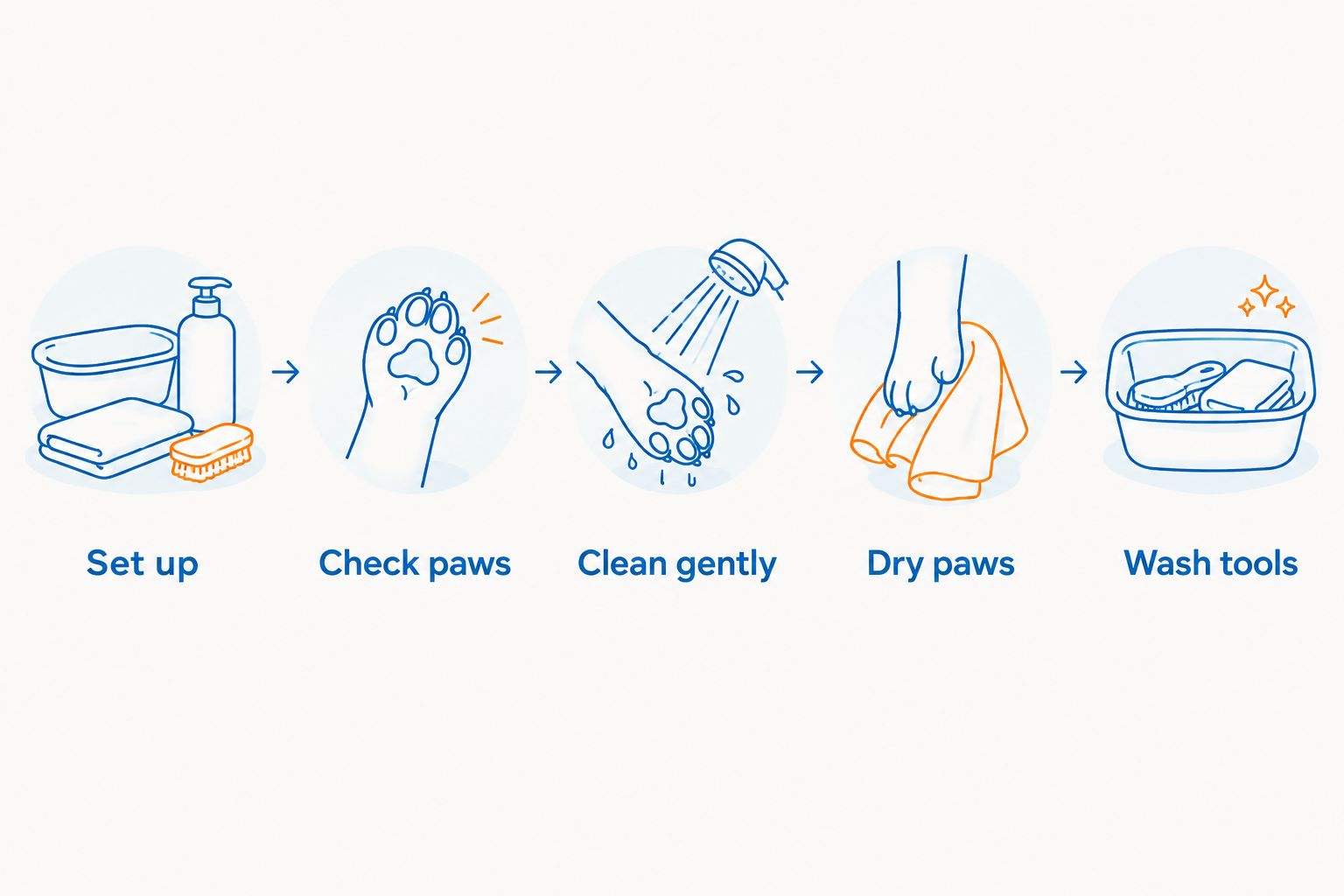
For your 2026 setup, keep the cleaner, clean water, and drying towel together before starting. Work on 1 paw at a time so you can support your dog without rushing through all 4 paws.
- Set up: Put your supplies within reach on a stable, easy-to-clean surface.
- Check paws: Look for visible debris, soreness, or anything that makes routine cleaning inappropriate.
- Clean gently: Use the chosen method according to its instructions. Never force a paw into a container.
- Dry paws: Gently dry the cleaned paw, including accessible spaces around the toes.
- Wash tools: Empty dirty water and clean the cloth, basin, or cup as directed.
Introduce unfamiliar equipment separately from a rushed, muddy arrival. Let your dog investigate it, then practice brief, gentle handling without making a complete wash the first goal.
Stop when your dog struggles or appears uncomfortable. Persistent licking, redness, swelling, or pain calls for veterinary advice rather than a stronger cleaning product.
How these options are ranked
This 2026 ranking prioritizes fit, dog acceptance, suitability for the dirt, and cleanup effort. It compares the methods described above; it does not claim measured cleaning performance or hands-on product testing.
The cup takes the default position for routine mud because it provides a contained rinse around a paw. The basin, cloth, and wipes each serve a different situation rather than competing for the same job.
Which paw cleaner should you choose?
Choose a correctly fitted paw-cleaning cup for routine muddy walks. Choose a basin when your dog needs open access, a damp cloth for light dirt, and dog paw wipes for portable backup.
For a 2026 purchase from Wags & Friends, confirm the Dog Paw Cleaner's measurements before deciding it suits a large dog. A clear fit answer matters more than a broad promise about clean floors.
FAQ
What's the best dog paw cleaner for a large dog?
A correctly fitted paw-cleaning cup is the default choice for routine muddy walks. Choose a shallow basin instead if your dog dislikes enclosed cups, or a damp cloth for light surface dirt.
Is the Wags & Friends Dog Paw Cleaner suitable for large dogs?
Confirm the Dog Paw Cleaner's usable opening and internal dimensions before choosing it for a large dog. Your dog's paw needs to enter and leave comfortably without forcing or catching the nails.
How do I measure my large dog's paw for a cleaner?
Measure the paw while your dog stands naturally, then compare it with the cleaner's usable internal measurements. Follow the product's measuring instructions and do not rely on outside container dimensions alone.
Are dog paw wipes better than a paw-cleaning cup?
Dog paw wipes suit portable spot cleaning, while a fitted cup suits a water-based rinse after muddy walks. Check the wipe's dog-use instructions, and do not substitute household surface-cleaning wipes.
What should I do if my dog refuses a paw-cleaning cup?
Stop trying to insert the paw and switch to a gentler, open method such as a damp cloth or shallow basin. Introduce unfamiliar equipment gradually rather than forcing a complete wash.
Do I need to dry my dog's paws after cleaning?
Yes, finish water-based paw cleaning with gentle towel drying. Keep a clean drying towel separate from the cloth or towel used to remove dirt.
Will a paw cleaner keep every muddy print off my floor?
No paw-cleaning method should be treated as a guarantee of spotless floors. Thoroughness, drying, your dog's movement, and the cleaning setup all affect the result.
One last thing
Put the drying towel where you can reach it without letting go of your dog's paw. A suitable cleaner handles only part of the routine; a ready towel lets you finish before your dog walks across the floor.