Best overall for light dirt: a damp washcloth. Best for muddy paws: a correctly sized paw-cleaning cup. Best for walks away from home: dog-safe paw wipes. This 2026 guide compares the best dog paw cleaners for small dogs by fit, cleanup needs, and how comfortably your dog accepts them.
- The best dog paw cleaners for small dogs match paw size, dirt level, and handling tolerance.
- Choose a damp washcloth for light dirt or a correctly sized paw-cleaning cup for muddy paws.
- Hdb0t7-yb lists a Dog Paw Cleaner; confirm its dimensions and care instructions before choosing it for small paws.
- Dog-safe paw wipes suit travel; a gentle water rinse suits grit that needs flushing away.
Why this matters
A small dog needs more than a cleaner labeled small. The opening must accommodate the paw without squeezing it, and you need to keep the leg in a comfortable position while cleaning.
The Hdb0t7-yb store lists a Dog Paw Cleaner. Treat it as a candidate, not a confirmed small-dog fit: check the product's dimensions, cleaning mechanism, and washing instructions before choosing it.
Your routine matters, too. A cleaner that requires more handling than your dog accepts is the wrong choice, even if its dimensions look suitable.
What makes the best dog paw cleaners for small dogs?
For this 2026 buying guide, use these criteria before choosing a cleaning method:
- Paw fit: Compare the cleaner's usable opening with your dog's paw, including fur and spread toes. Do not choose by body weight alone.
- Comfortable handling: Choose a method you can use without forcing the paw into position or twisting the leg.
- Dirt removal: Match the method to the job: loose dust, wet mud, and trapped grit need different handling.
- Cleaner maintenance: Check whether you can reach the inside, remove residue, and dry the parts according to the instructions.
- Floor cleanup: Plan where dirty water, used wipes, and the drying towel will go before you start.
Choose the least complicated method that removes the dirt without a struggle. A dedicated tool earns its place when it makes your actual cleanup routine easier, not simply because it is sold for dogs.
Small-dog paw cleaners at a glance
| Option | Best for | Standout feature | Key limitation |
|---|---|---|---|
| Damp washcloth | Light dirt and dogs new to paw handling | You control contact and pressure | Needs repeated rinsing when muddy |
| Correctly sized paw-cleaning cup | Muddy paws after outdoor walks | Contains water around the paw | Fit and handling tolerance need checking |
| Dog-safe paw wipes | Cleanup away from home | No separate water container needed | A wipe is not a thorough rinse |
| Gentle water rinse | Loose grit and dirt between toes | Lets you direct water where needed | Requires a suitable washing area and drying |
These are ranked by use case, not by a claim that one method cleans every dog better. A small dog with lightly dusty paws needs a different setup from one returning from a muddy yard.
1. Damp washcloth: best for light dirt and cautious dogs
A damp washcloth lets you wipe the paw while controlling exactly where you touch. Start with the areas your dog tolerates, then gently clean the pads and accessible spaces between the toes.
This is the default recommendation for light dirt in 2026. It also gives you a simple way to learn whether your dog accepts paw handling before introducing a cup or another cleaning tool.
Damp washcloth pros:
- You control pressure rather than relying on an internal cleaning surface.
- You can clean a small area without immersing the whole paw.
- The same method works at an entryway or beside a washing area.
Damp washcloth cons:
- Heavy mud requires rinsing the cloth repeatedly.
- Wiping alone does not flush debris from between the toes.
- You still need a separate dry towel afterward.
Best for: Small dogs with light surface dirt, especially those unfamiliar with having their paws cleaned.
Use a soft cloth dampened with plain water. Move to a clean part of the cloth as it gets dirty instead of spreading the same residue across all 4 paws.
Verdict: Buy a dedicated washcloth if light dirt is your main problem. Keep it with your walking supplies so it becomes part of the return-home routine.
2. Paw-cleaning cup: best for muddy paws after walks
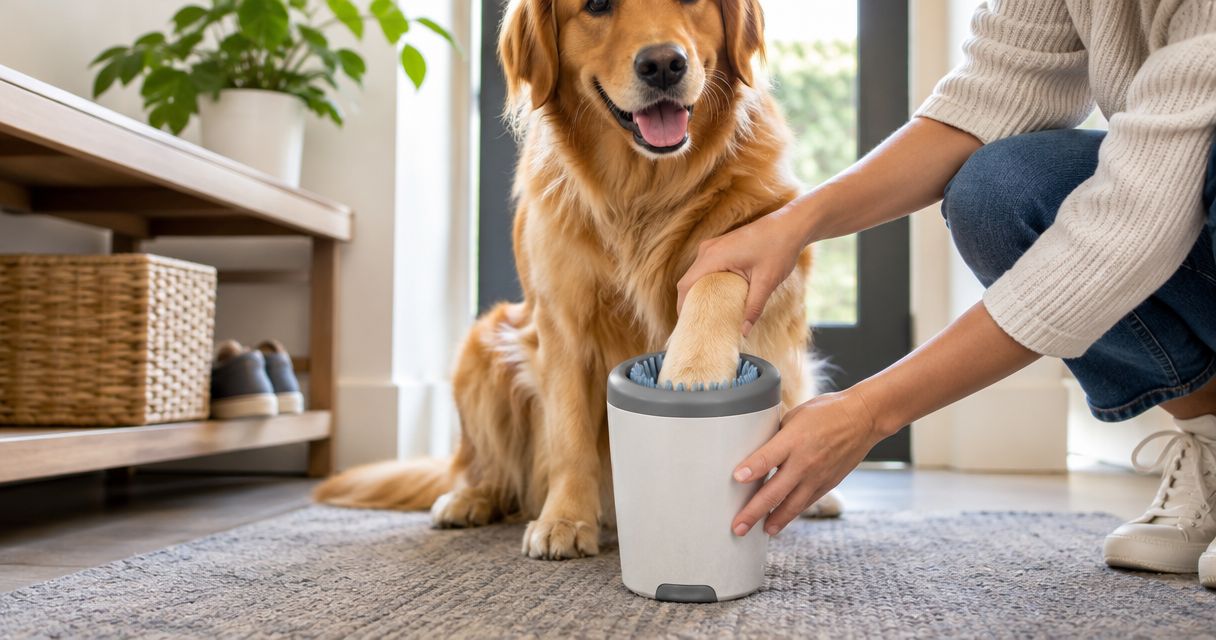
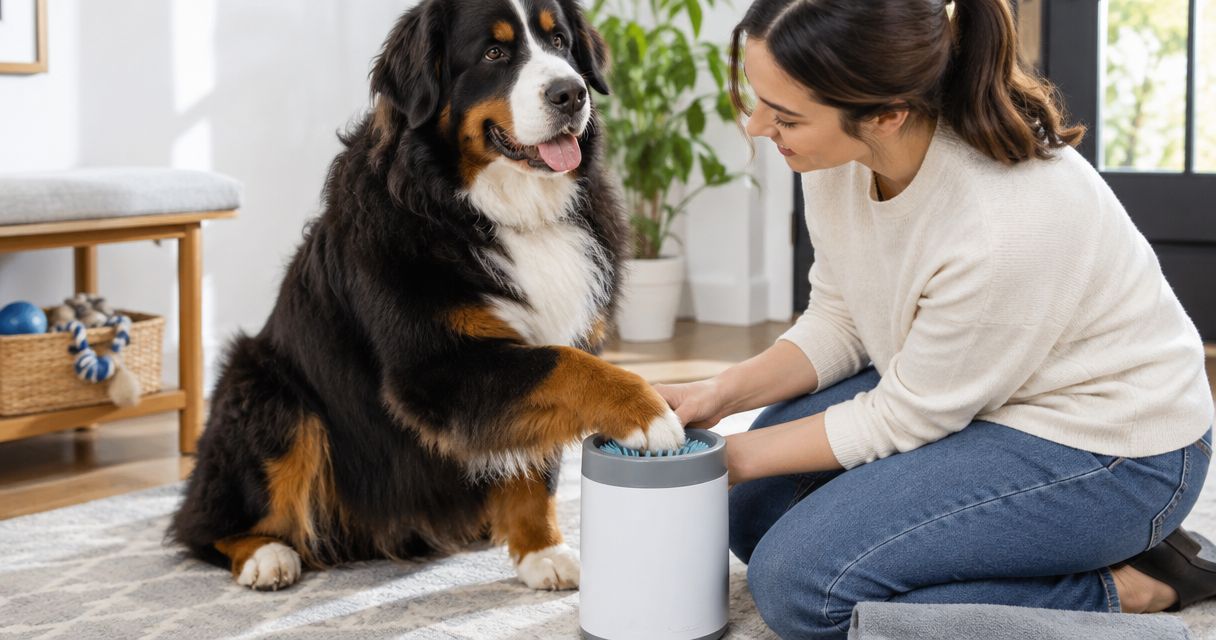
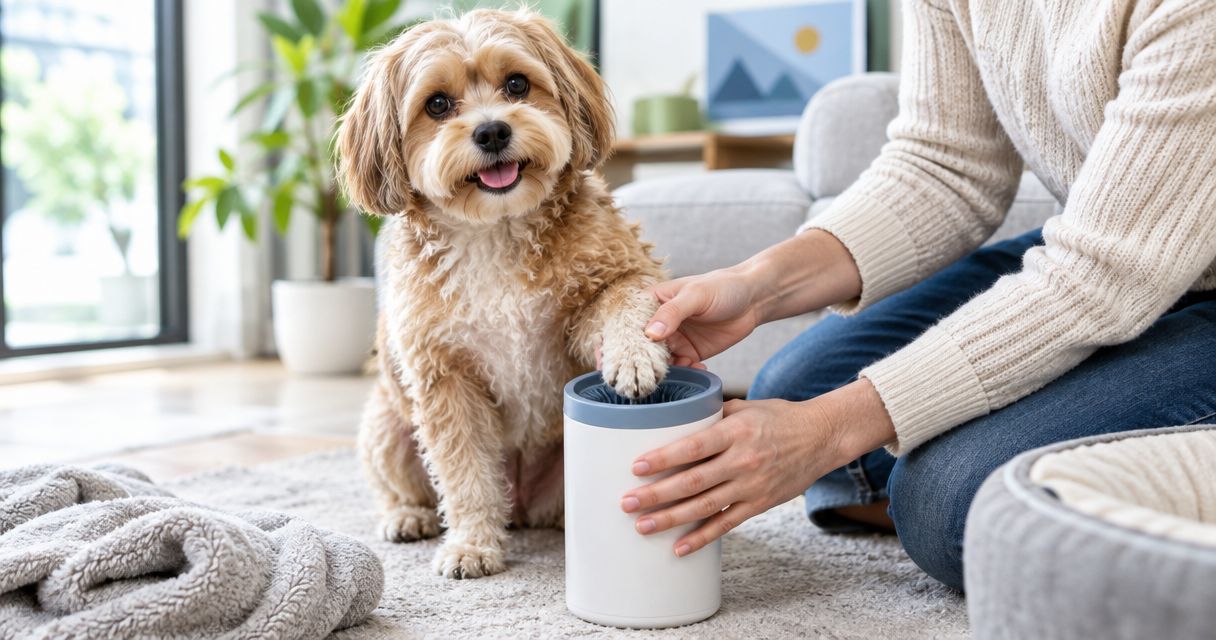
A paw-cleaning cup holds water around an inserted paw. Designs differ, so check the actual cleaning surface, insertion depth, and instructions rather than assuming every cup works the same way.
A cup belongs on your shortlist when muddy paws are a recurring problem. It does not remove the need to dry your dog, rinse the cleaner, or deal with the dirty water afterward.
Paw-cleaning cup pros:
- Holds the cleaning water in a container around the paw.
- Gives you a dedicated tool to keep near the door.
- Provides a water-based alternative to repeated surface wiping.
Paw-cleaning cup cons:
- An unsuitable opening can make insertion or removal uncomfortable.
- Some dogs dislike placing a paw inside a container.
- The inside needs cleaning and drying after use.
Best for: Small dogs that tolerate paw handling and regularly return with muddy feet.
Where the listed Dog Paw Cleaner fits
Hdb0t7-yb's Dog Paw Cleaner is a small-dog shortlist option only after you confirm its fit. The supplied listing identifies it as a paw cleaner but does not establish its dimensions, materials, internal design, or suitability for a particular paw size.
Before choosing the Hdb0t7-yb Dog Paw Cleaner, check those details against your dog's paws. Do not assume that it has removable parts, a particular cleaning surface, or a mess-free result.
Verdict: Hold until the cup's dimensions and instructions confirm a comfortable fit. A product name alone is not enough to choose a cleaner for a small dog.
3. Dog-safe paw wipes: best for cleanup away from home
Dog-safe paw wipes are a portable option when you do not have a convenient water source. Choose wipes explicitly labeled for dogs and follow their directions, including any restrictions on where to use them.
Their main advantage is convenience. Their limitation is equally clear: wiping the surface is not the same as rinsing mud or grit out of the spaces between the toes.
Dog-safe paw wipes pros:
- Easy to carry with walking supplies.
- No separate washing container is needed.
- Let you address a dirty patch before entering a car or home.
Dog-safe paw wipes cons:
- Create disposable waste.
- Need replacing as each wipe becomes dirty.
- Do not provide flowing water to flush away debris.
Best for: Outings, car trips, and light cleanup before a fuller wash at home.
Read the label rather than substituting household cleaning wipes. If your dog reacts to a product, stop using it and ask your veterinarian about an appropriate alternative.
Verdict: Buy dog-safe paw wipes for your walking bag; skip them as your only answer to heavy mud.
4. Gentle water rinse: best for loose grit between toes
A gentle rinse gives you direct access to the pads and spaces between the toes. Use a basin or suitable washing area where your dog can stand securely, and avoid spraying forcefully at the paw.
This method makes sense when wiping keeps moving dirt around rather than removing it. Keep the session focused on the paws instead of turning every muddy walk into a full bath.
Gentle water rinse pros:
- Lets you direct water toward visible dirt.
- Does not require pushing the paw into a fitted opening.
- Allows you to inspect each paw as you rinse.
Gentle water rinse cons:
- Needs a suitable washing area.
- Can wet the surrounding floor or your dog's legs.
- Requires careful drying afterward.
Best for: Loose grit, dirt between toes, and dogs that accept gentle rinsing better than a cup.
Do not dig at embedded material or keep scrubbing an uncomfortable paw. Stop and contact your veterinarian if you see an injury, persistent redness, swelling, or limping.
Verdict: Skip the fitted cup if your dog accepts a gentle rinse more comfortably. Use the method your dog can cooperate with.
How to check a cleaner's fit before buying
In 2026, a small-size label is still only a starting point. Measure your dog's paw while it rests naturally on the floor, then compare that measurement with the manufacturer's stated usable opening and fit guidance.
Check the withdrawal path, too. You need to remove the paw without catching toes, nails, or fur; do not judge fit only by whether the paw can go in.
Ask these questions before choosing a cup:
- Is the stated measurement the usable opening or the outside width?
- Does the manufacturer explain how to measure the paw?
- Can you reach the recommended position without bending the leg awkwardly?
- Are cleaning and drying instructions clear?
- Will your dog voluntarily approach and investigate the tool?
A cleaner that looks convenient on a product page still needs to work at your doorway. Think through where you will place it, support your dog, and reach the towel before committing to the routine.
A simple paw-cleaning routine for small dogs
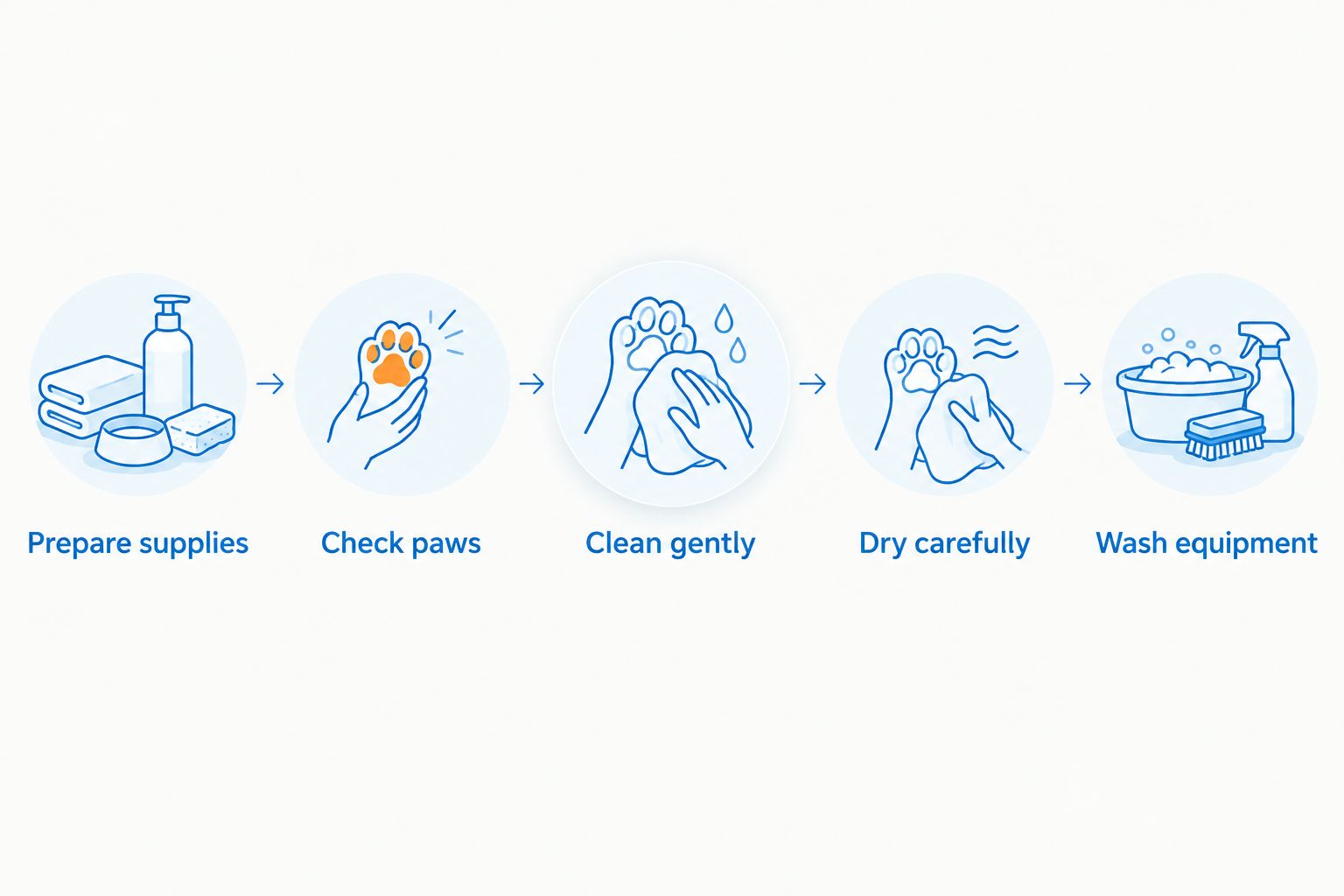
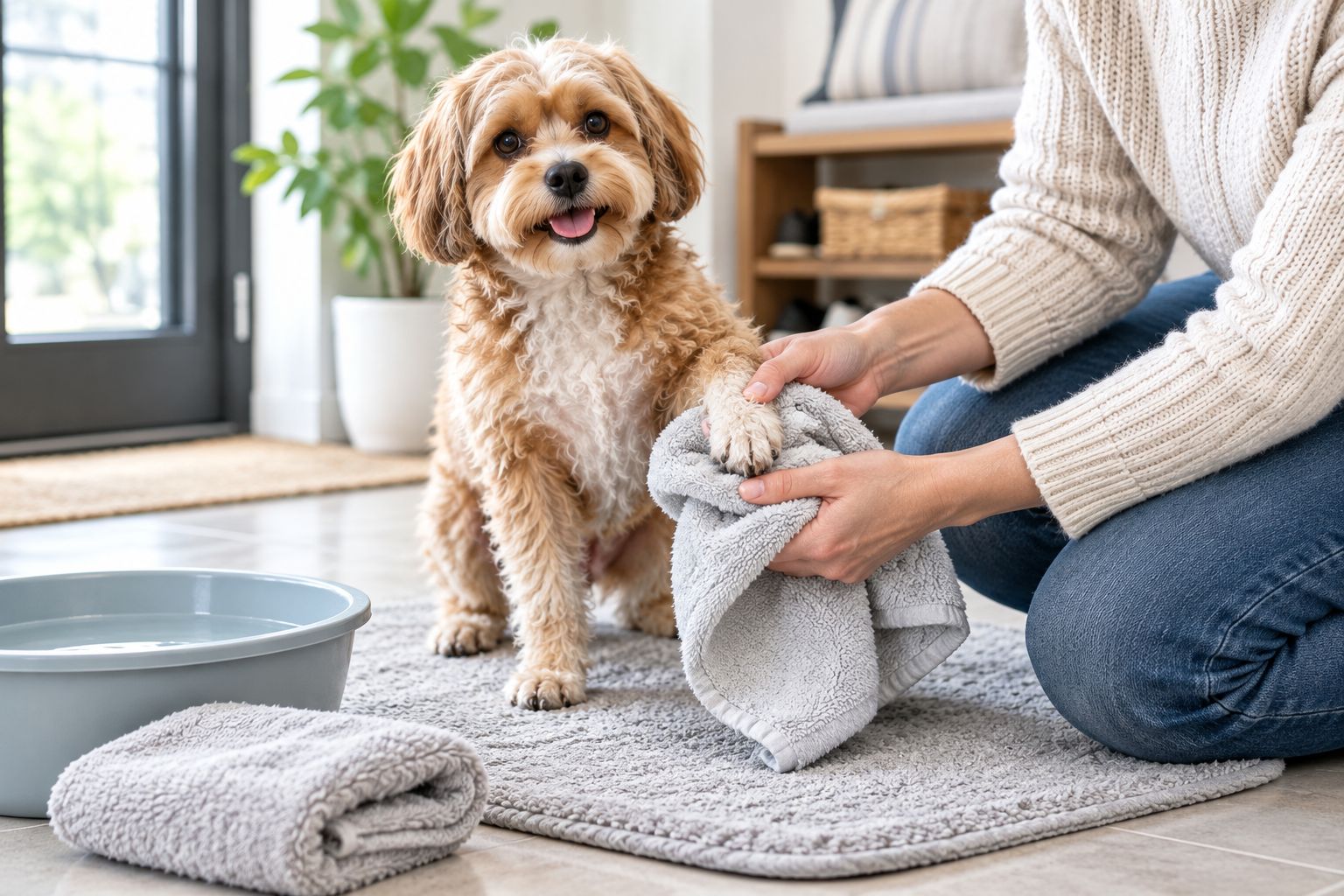
Set out 2 towels: one under the cleaning area and one for drying. Prepare the water or cloth before bringing your dog over, so you do not have to search for supplies while holding a paw.
- Prepare supplies: Put the cleaner, water, and towels within reach on a stable surface.
- Check paws: Look for visible debris, damaged nails, or signs that touching a paw hurts.
- Clean gently: Work on 1 paw at a time, following the tool's instructions and keeping the leg comfortable.
- Dry carefully: Pat the pads, toes, and surrounding fur rather than leaving the paw dripping.
- Wash equipment: Empty dirty water and clean the tool according to its care instructions.
Start slowly if your dog is unfamiliar with the process. Let your dog inspect the equipment, and pause if handling becomes a struggle.
Keep muddy-paw cleanup separate from drinking-water cleanup
A paw cleaner addresses dirt brought in from outside. A drinking bowl addresses a different part of the routine, so buying one does not solve the other's cleanup job.
For your 2026 entryway setup, keep paw-cleaning equipment separate from drinking supplies. Place the dirty-water container where it cannot be confused with your dog's drinking water, and empty it after cleaning.
How the options are ranked
This guide ranks cleaning methods by fit, handling, dirt removal, maintenance, and the cleanup left behind. It does not present a hands-on product test or assign unsupported performance scores.
The washcloth takes the default spot because it offers direct control for light dirt without requiring a fitted opening. Cups, wipes, and rinsing each get a separate use case instead of competing for a universal winner.
Which paw cleaner should you choose?
Start with a damp washcloth for light dirt. Choose a correctly sized cup when muddy paws justify a dedicated tool. Keep wipes for outings, and use a gentle rinse when debris needs flushing away.
For your 2026 purchase, fit and cooperation come before extra features. If a cleaner needs force to use, choose another method rather than trying to make your dog tolerate it.
FAQ
What's the best dog paw cleaner for a small dog?
A damp washcloth is the default choice for light dirt; a correctly sized paw-cleaning cup suits muddy paws. Choose according to paw fit, dirt level, and how comfortably your dog accepts handling.
How do I know whether a paw-cleaning cup will fit?
Compare your dog's resting paw measurement with the manufacturer's usable opening and fit instructions. Check that the paw can enter and withdraw without catching toes, nails, or fur.
Is the Hdb0t7-yb Dog Paw Cleaner suitable for small dogs?
Confirm the product's dimensions and fit guidance before choosing it for a small dog. The supplied listing does not establish measurements or a specific small-paw fit.
Are dog paw wipes better than a paw-cleaning cup?
Dog-safe paw wipes suit portable surface cleanup, while a correctly sized cup provides water-based cleaning around the paw. Neither replaces checking between the toes and drying afterward.
Should I clean my dog's paws after every walk?
Check your dog's paws after walks and clean them when dirty. Match the method to what you find rather than giving clean paws an unnecessary wash.
Can I use household cleaning wipes on my dog's paws?
Use products explicitly labeled for dogs and follow their directions instead of substituting household cleaning wipes. Ask your veterinarian for guidance if your dog has irritated skin or reacts to a product.
What should I do if my dog pulls away during paw cleaning?
Stop forcing the process and check whether the position, tool, or paw itself is causing discomfort. Use a gentler method, and contact your veterinarian if pain, swelling, injury, or limping is present.
One last thing
The drying towel is part of the cleaner, not an optional extra. Even a well-contained wash leaves wet paws to manage, so put the towel within reach before the water touches your dog.