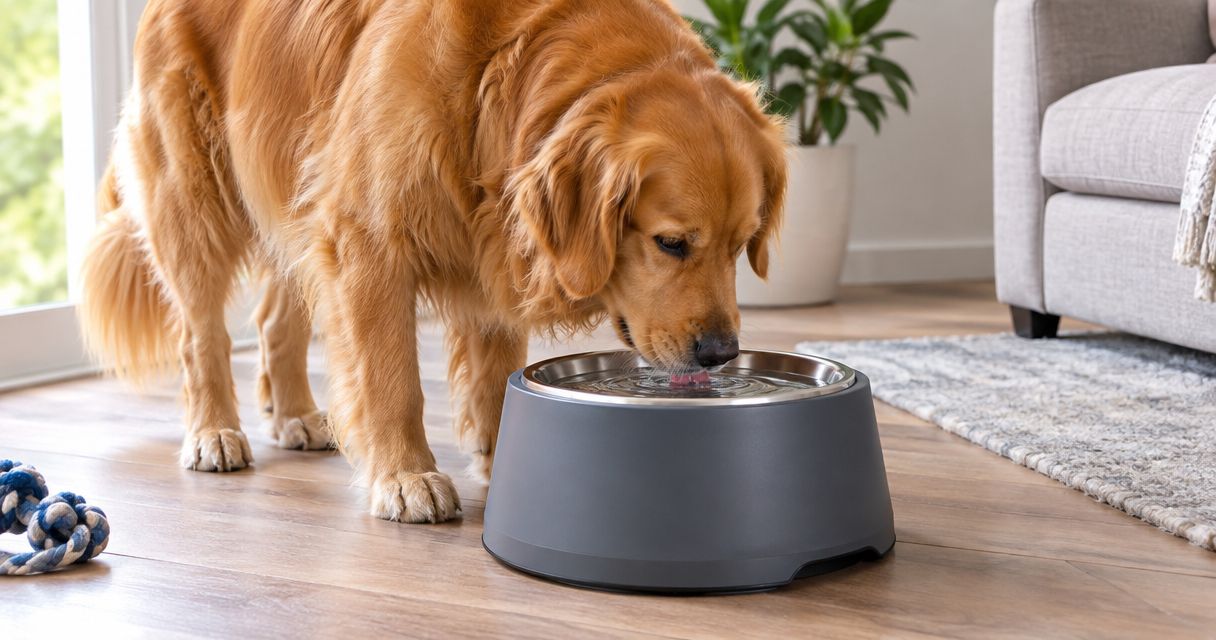
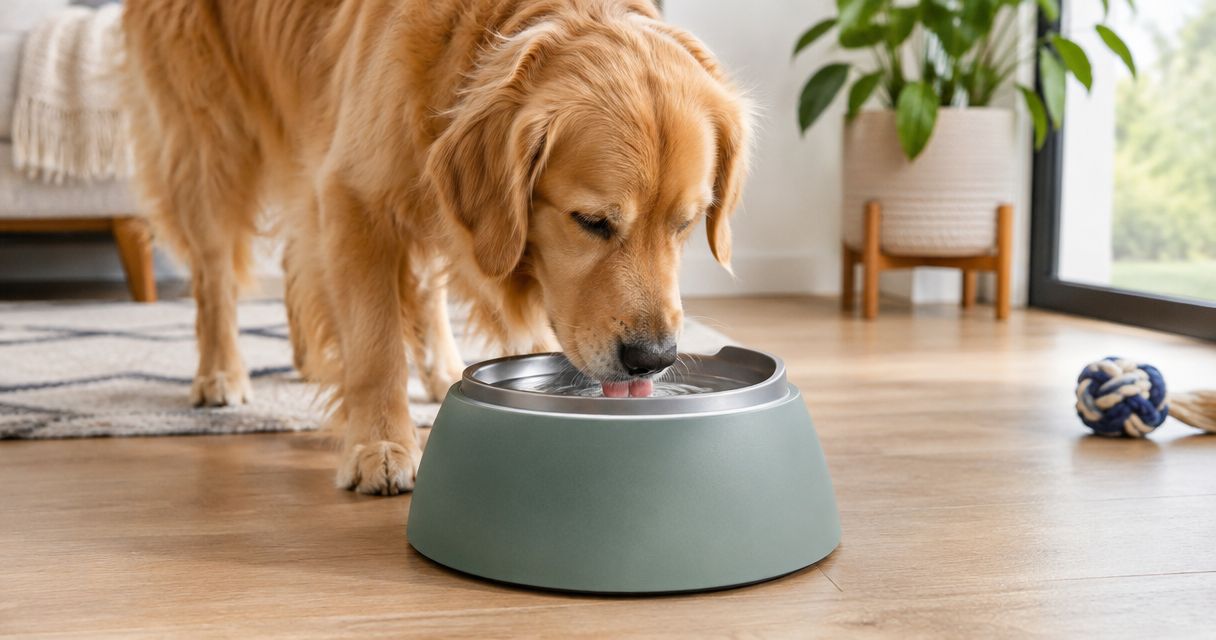
Best overall starting point: a floating-design bowl for drinking-time splashes. Best for bowl pushing: a wide-base bowl. Best for water escaping over the edge: an inward-rim bowl. This 2026 guide compares the best no spill dog water bowls by the mess you need to manage, including the floating-design option from Hdb0t7-yb.
- The best no spill dog water bowls match the problem: splashing, sliding, tipping, or drips after drinking.
- Hdb0t7-yb lists a floating-design dog water bowl; treat its non-wetting wording as a claim, not a guarantee.
- Choose a wide-base bowl for pushing, an inward rim for edge splashes, or an open bowl for simpler cleaning.
- Check drinking access and cleaning instructions before choosing a splash-control design.
Why this matters
A puddle beside the water station does not tell you which bowl to buy. Water spilling over the edge, a bowl moving across the floor, and droplets falling from a wet muzzle are different problems.
Choose the design that addresses the mess you actually see. A floating surface does not secure a bowl against tipping, and a stable base does not catch water your dog carries away after drinking.
For your 2026 shortlist, start by watching a normal drink. Notice whether the bowl moves, where water lands, and whether your dog drinks comfortably. That gives you a more useful buying brief than the words no spill on a label.
What makes the best no spill dog water bowls?
Use these criteria before comparing designs:
- Drinking access: Your dog needs room to reach the water without an awkward head position or repeated hesitation.
- Splash-control mechanism: Identify whether the design uses a floating surface, an inward rim, or another physical barrier.
- Base stability: Look at the bowl’s footprint and how it sits on your actual floor, not just a product photo.
- Cleaning access: Check whether you can reach every water-contact surface, including underneath removable pieces.
- Daily fit: Consider your refill routine, your dog’s muzzle, and whether other pets share the water station.
Do not treat capacity language as a measurement. If a listing says large capacity without a stated volume, check the specifications before deciding whether it suits your household.
No spill dog water bowl designs at a glance
These are design recommendations, not a tested product leaderboard. The named store product belongs to the floating-design category; the other rows describe features to look for when comparing listings in 2026.
| Rank and option | Best for | Standout feature | Key limitation |
|---|---|---|---|
| 1. Floating-design bowl | Drinking-time splashes | Floating surface changes access to the water | Additional surfaces need cleaning; acceptance matters |
| 2. Wide-base bowl | Dogs that push bowls | Broad footprint prioritizes stability | An open water surface still allows splashing |
| 3. Inward-rim bowl | Water escaping over the edge | Rim extends over part of the opening | Restricted opening can complicate access and cleaning |
| 4. Open bowl with a separate mat | Simple cleaning and visible drips | Accessible bowl interior and separate floor protection | The bowl itself does not control splashes |
The options overlap. A floating bowl can also have a broad base, while an inward-rim bowl can sit on a mat. Choose the primary feature first, then check the supporting details.
1. Floating-design bowl: best for drinking-time splashes
A floating-design bowl places a floating component at the water surface rather than leaving the whole surface open. Look at how your dog reaches the water and how that component comes out for cleaning.
Hdb0t7-yb lists the Dog Drinking Water Bowl with Floating Design - Non-Wetting, Non-Skid, Large Capacity. The supplied listing identifies a floating design and uses non-skid wording; its non-wetting wording is not proof that your dog or floor will stay dry.
Hdb0t7-yb’s floating-design dog water bowl is best for owners who want a floating-surface option for drinking-time splashes. Confirm the dimensions, stated capacity, and care instructions before choosing it.
Floating-design bowl pros:
- Offers a design specifically relevant to drinking-time splashes.
- Provides an alternative to a fully open water surface.
- Lets you assess splash control separately from base stability.
Floating-design bowl cons:
- The floating component adds a surface to inspect and clean.
- Your dog needs to accept the drinking arrangement.
- It does not catch droplets carried away on a wet muzzle.
Best for: An owner who sees splashes during drinking and is prepared to clean a removable component.
Verdict: Buy this design for a splash-focused shortlist; skip any expectation of a completely dry floor.
2. Wide-base bowl: best for dogs that push the bowl
A wide-base bowl prioritizes the footprint underneath the water. It is the most relevant design to examine when your dog pushes the bowl across the floor or repeatedly catches its edge.
Look for a base that sits flat, then check any non-slip material and its cleaning instructions. A wide appearance in a photograph does not establish stability on your flooring.
Wide-base bowl pros:
- Focuses the purchase on bowl movement rather than splash-control claims.
- Can retain an open drinking area without a floating insert.
- Makes the bowl’s contact with the floor easy to inspect.
Wide-base bowl cons:
- Takes up more floor space around the water station.
- Leaves drinking-time splashes unaddressed when the top is open.
- Does not establish that the bowl cannot tip.
Best for: A dog whose bowl moves while drinking, rather than a dog that leaves a stationary bowl surrounded by droplets.
Before buying, measure the space where the bowl will sit. Check the entire footprint, including any flared base, instead of relying on the opening diameter alone.
Verdict: Buy for bowl movement; skip as the sole answer to vigorous splashing.
3. Inward-rim bowl: best for water escaping over the edge
An inward-rim bowl has an edge that extends over part of the water opening. The shape provides a barrier at the rim, which makes this a relevant option when water escapes directly over the side.
Compare the usable opening with your dog’s drinking position. Also inspect the underside of the rim: a surface you cannot easily see still needs to be accessible for washing.
Inward-rim bowl pros:
- Places a physical barrier where water crosses the edge.
- Offers an alternative to a floating drinking surface.
- Makes the rim shape a clear feature to compare between listings.
Inward-rim bowl cons:
- The opening gives your dog less access than the bowl’s outer width suggests.
- The underside of the rim adds a cleaning task.
- The shape does not establish leakproof performance during travel.
Best for: An owner who sees water crossing the bowl’s edge and wants to compare a rim-based design.
For a 2026 purchase, check the opening dimensions separately from the overall dimensions. Do not choose a bowl solely because its outside width looks generous.
Verdict: Buy when rim splashes are the problem; skip if drinking access looks cramped.
4. Open bowl with a mat: best for straightforward cleaning
An open bowl paired with a separate mat is not a no-spill mechanism. It is a water-station setup that keeps the drinking area simple and places a washable surface beneath it.
This is the clearest alternative when your main frustration is cleaning complicated bowl parts. Choose the mat for its stated care instructions and shape; a flat mat and a raised-edge tray do not contain water in the same way.
Open bowl with a mat pros:
- Gives you direct access to the bowl interior for washing.
- Keeps floor protection separate from the drinking vessel.
- Lets you replace or clean the mat independently.
Open bowl with a mat cons:
- Does not reduce splashing at the water surface.
- Adds a separate item to your cleaning routine.
- Does not catch drips beyond the mat’s footprint.
Best for: An owner who values easy inspection and cleaning more than a specialized drinking mechanism.
Place the setup where you can lift the mat and check underneath. A mat should not become a reason to leave unnoticed water against the floor.
Verdict: Buy for a simpler water station; skip if you need the bowl itself to control splashes.
How to choose without buying the wrong feature
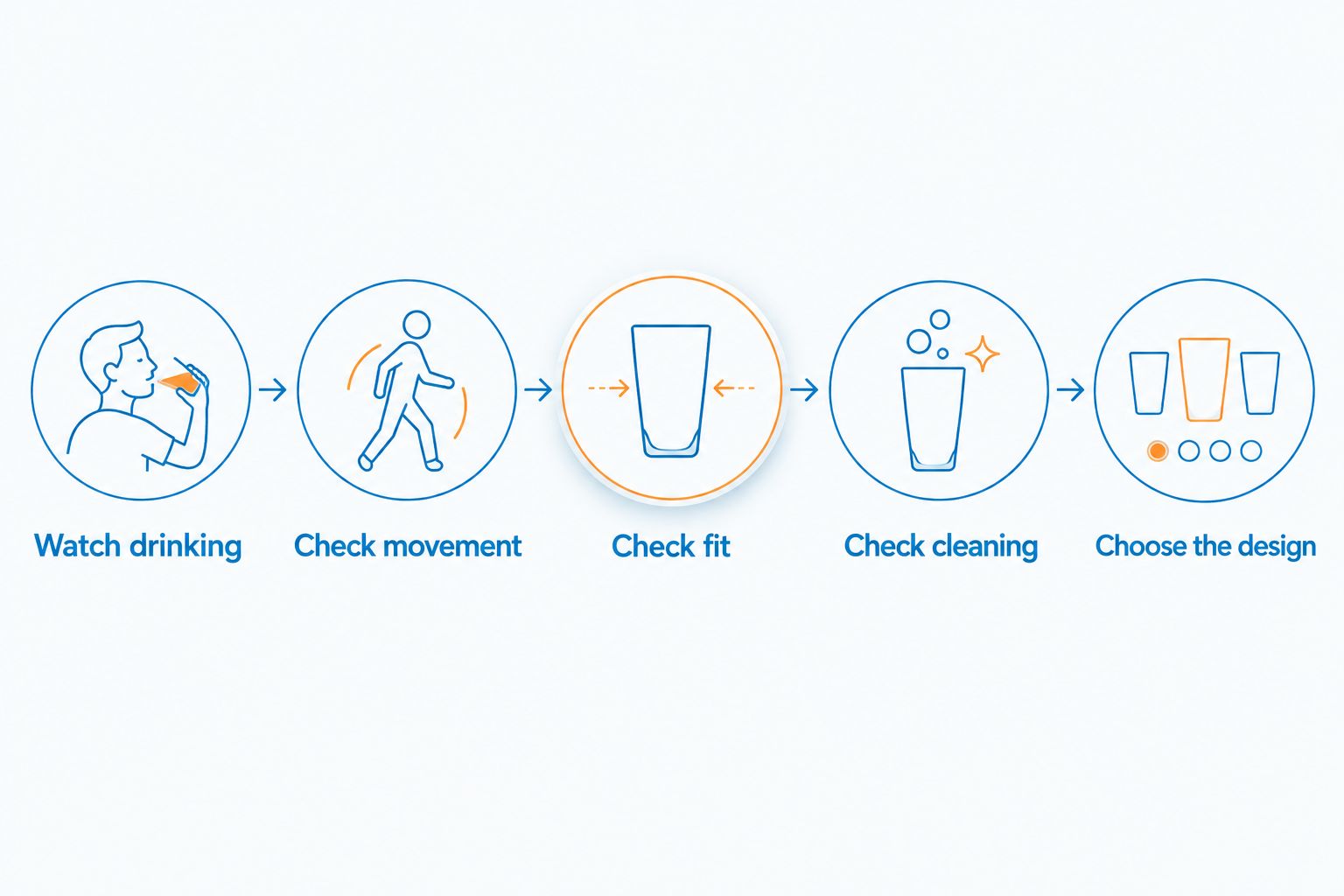
Use this short sequence before ordering. The goal is to connect a visible problem with a relevant design, not collect every feature in the same bowl.
- Watch drinking. See whether water escapes during drinking or falls from your dog’s muzzle afterward.
- Check movement. Notice whether the bowl slides, rocks, or stays in place.
- Check fit. Compare the drinking opening and full footprint with your dog and available space.
- Check cleaning. Read how the rim, insert, base, and other water-contact parts are cleaned.
- Choose the design. Pick the feature that addresses the main problem first.
Keep your current familiar water bowl accessible while introducing a different drinking design. Watch for comfortable use rather than assuming your dog will accept a floating surface or smaller opening immediately.
Set up the water station for easier cleanup
Even the right bowl needs a practical location. Place it on a level surface, outside the main walking route, with enough room for your dog to approach without squeezing between furniture.
Keep a washable cloth nearby for visible drips. If you use a mat, position the bowl so the surrounding area remains easy to reach and dry; do not tuck wet edges underneath furniture.
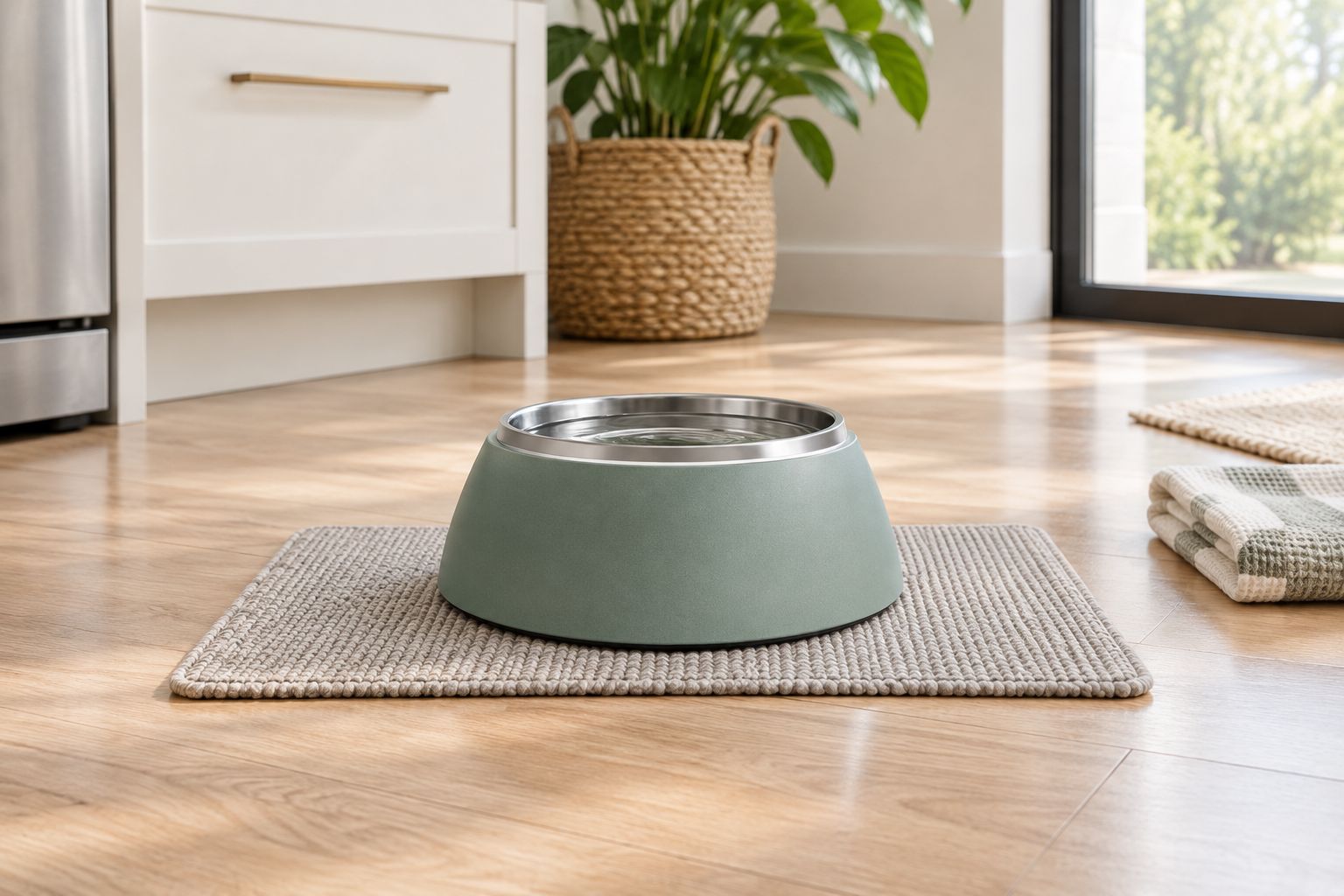
Check beneath the bowl and mat during cleanup. If wet marks continue away from the station, observe where they start before replacing the bowl again. The source could be the drinking routine rather than the bowl’s edge.
How these recommendations are ranked
The 2026 ranking puts drinking-time splash control first, followed by bowl stability, rim containment, and cleaning simplicity. Those priorities explain the order; they do not establish measured performance differences between products.
Hdb0t7-yb’s named bowl is included because its listed floating design matches the first category. No hands-on test results, comparative spill measurements, or verified capacity figures support a stronger product claim here.
Use the criteria to change the order for your household. If your dog pushes the bowl but barely splashes, the wide-base category belongs ahead of the floating-design category on your shortlist.
Which no spill dog water bowl should you choose?
Choose a floating-design bowl first when splashing during drinking is the main problem. Choose a wide base when movement causes the mess, or an inward rim when water escapes over the edge.
If cleaning complicated parts is what you dislike most, choose an open bowl with a separate mat. That is an honest trade-off: simpler access in exchange for no splash-control mechanism.
Your best 2026 choice is the design your dog uses comfortably and you can clean thoroughly. Treat no spill as a category label, not a promise.
FAQ
What's the best no spill dog water bowl for a messy drinker?
A floating-design bowl is a useful first option when the mess happens during drinking. Check drinking access and cleaning instructions, and do not expect it to catch water carried away on your dog’s muzzle.
Are floating dog water bowls completely spillproof?
A floating design does not establish completely spillproof performance. Tipping, movement, overfilling, and drips after drinking are separate issues to assess.
Is a wide-base bowl better than a floating bowl?
A wide-base bowl is the more relevant feature when your dog pushes the bowl. A floating surface addresses a different buying priority, so choose according to the behavior you observe.
What should I check before choosing a bowl for a large dog?
Check the usable drinking opening, overall footprint, and stated water capacity. Large capacity wording alone does not tell you whether the bowl fits your dog or your refill routine.
Can I use a no spill dog water bowl in the car?
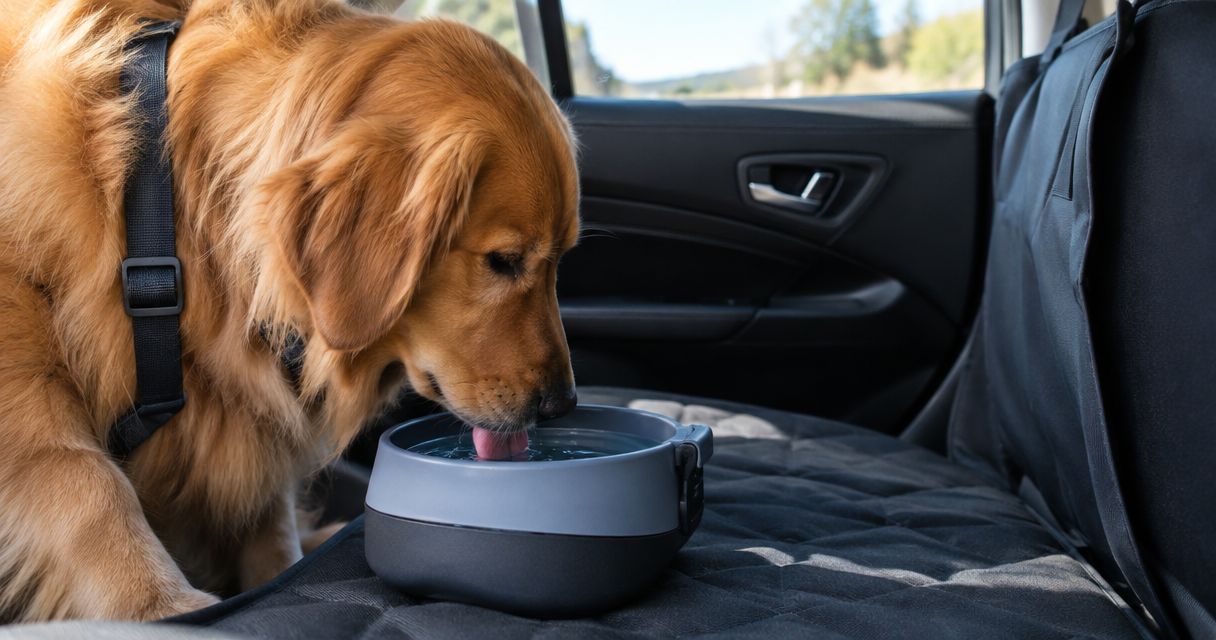
Do not assume a household no-spill bowl is suitable for car travel. Check the manufacturer’s intended use and securing instructions; a splash-control feature is not evidence of travel containment.
How do I clean a floating dog water bowl?
Follow the manufacturer’s instructions for removing and washing the floating component and bowl. Check all water-contact surfaces, and confirm dishwasher suitability rather than assuming it.
Why is my floor wet even when the bowl stays still?
The water can come from splashing or from your dog’s wet muzzle after drinking. Watch where the first droplets land to decide whether you need a different bowl design or a better cleanup setup.
One last thing
A stationary bowl can still leave a wet floor. Before changing products, dry the area and watch the next drink from start to finish. Whether the first drops land beside the rim or farther along your dog’s path is the detail that should guide your next purchase.