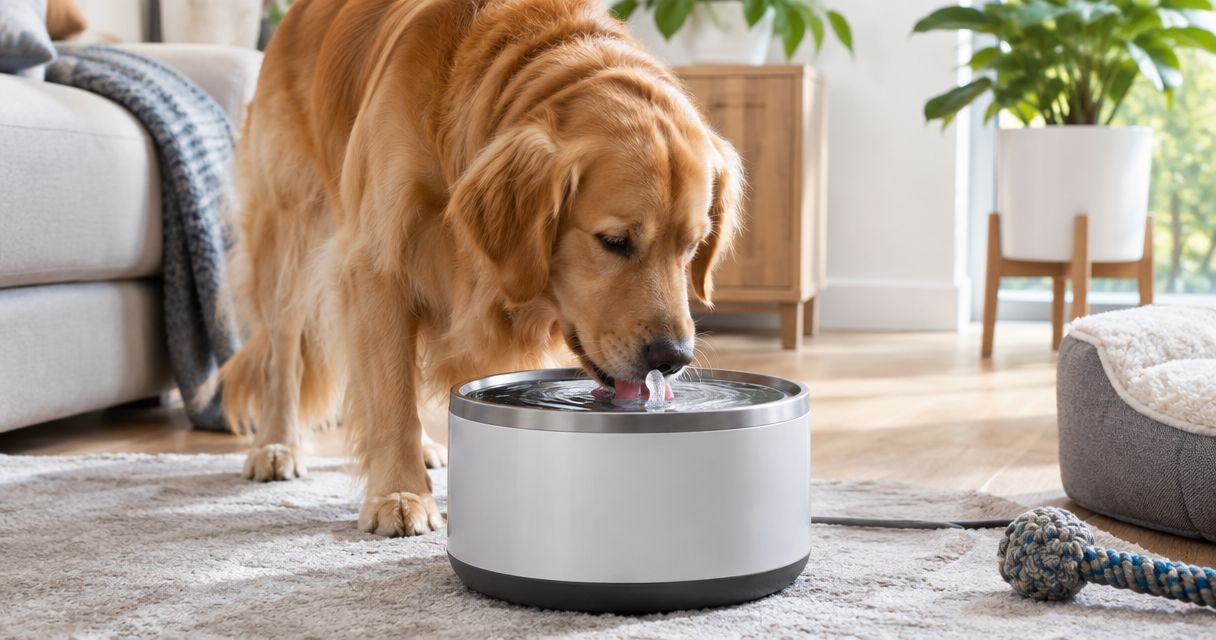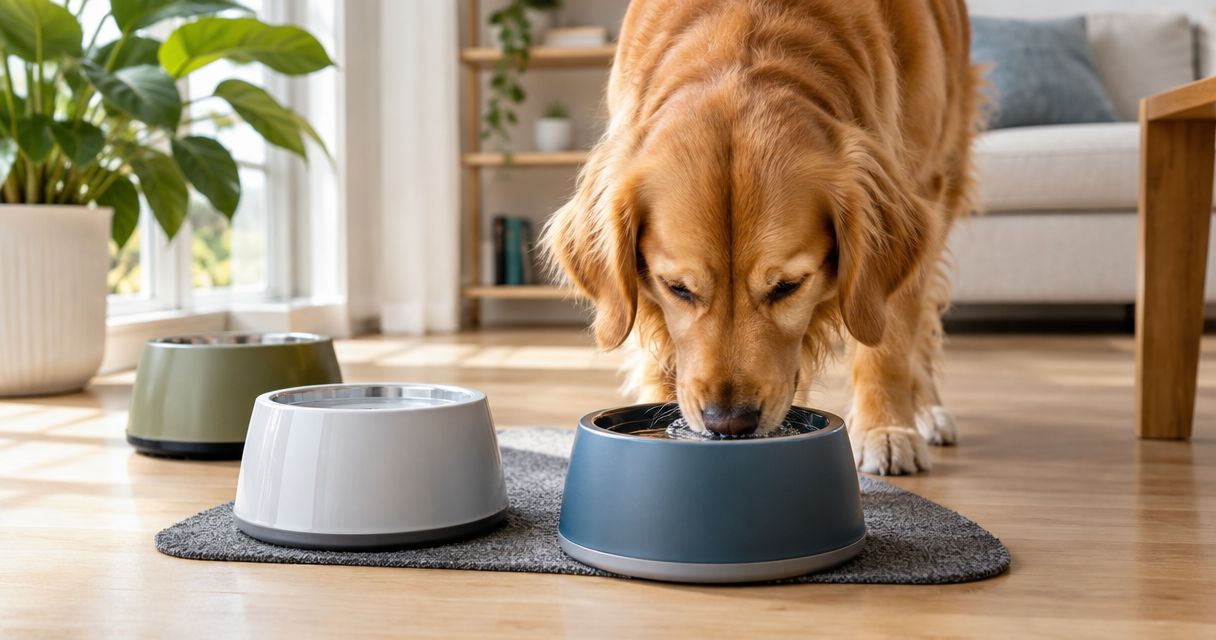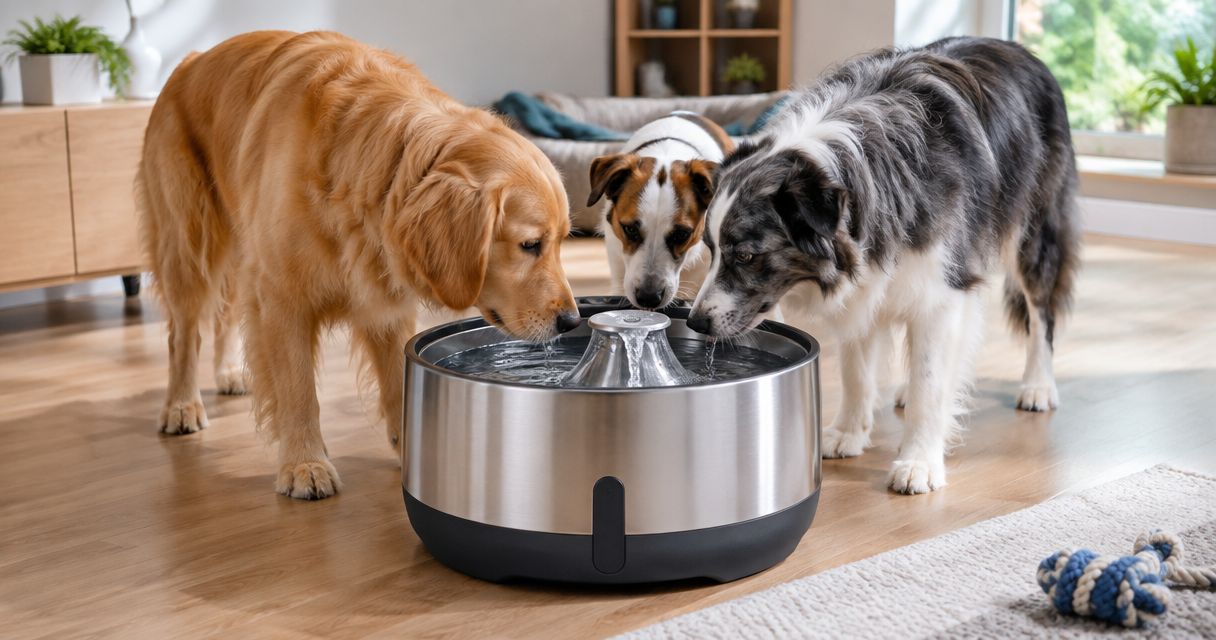
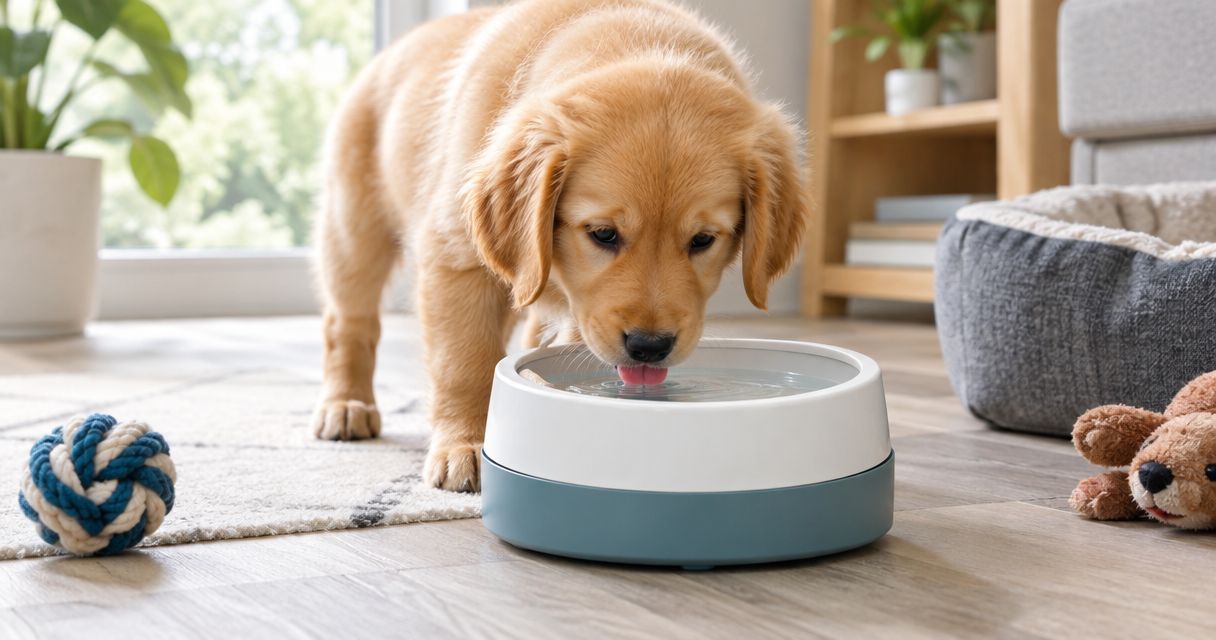
Best overall: a stable, wide-base open bowl. Best for splash management: a floating-plate bowl. Best for supervised travel stops: a lidded travel bowl. The best no spill dog water bowls for puppies in 2026 are the ones your puppy can drink from comfortably and you can clean thoroughly—not the ones with the strongest mess-free promise.
- The best no spill dog water bowls for puppies prioritize easy drinking, stability, and accessible cleaning.
- Choose a wide-base open bowl first if your puppy struggles with restricted drinking openings.
- Consider a floating-plate bowl for splashing, but check drinking access before making it the main bowl.
- Treat no-spill wording as a design description, not a guarantee of dry floors.
Why this matters
A puppy can make a wet floor by tipping the bowl, paddling in it, splashing while drinking, or carrying water away on its muzzle. Those are different problems. A lid or floating plate does not address all of them.
Before browsing the pet accessories at hdb0t7-yb.myshopify.com, watch what happens at your current water station. Choose the design that addresses the actual mess without making drinking harder.
Your puppy's access to water comes before your floor-cleaning routine. Keep a familiar bowl available while introducing a different design, and do not limit water simply to avoid spills.
What makes the best puppy water bowl?
For this 2026 guide, the selection criteria put drinking access ahead of extra features:
- Comfortable access: Your puppy should reach the water without stretching awkwardly, pushing its face into a tight opening, or struggling with a moving part.
- Stability: Look for a base that sits securely on your floor. A non-skid label alone does not tell you whether a puppy can tip the bowl.
- Relevant spill control: Match the design to tipping, splashing, or play rather than treating every wet patch as the same problem.
- Cleaning access: Check whether you can reach the reservoir, underside of a plate, rim channels, and other wet surfaces.
- Suitable fit: Use the actual bowl dimensions and drinking-opening measurements. Labels such as small, large, and puppy do not establish fit.
- Manageable upkeep: Pick a bowl you will empty, wash, rinse, and refill consistently. Extra parts add cleaning tasks.
Puppy water bowls at a glance
These are ranked design options, not claims that particular products have passed comparative testing. Individual construction and fit still matter.
| Rank and option | Best for | Standout design feature | Key limitation |
|---|---|---|---|
| 1. Wide-base open bowl | Puppies learning a water-station routine | Direct access to the drinking surface | Does not prevent paw play or splashing |
| 2. Floating-plate bowl | Puppies that splash while lapping | Plate sits over part of the water surface | Drinking access and plate cleaning need checking |
| 3. Rimmed splash-control bowl | Puppies that push water toward the edge | Inward rim partly covers the perimeter | Rim channels can complicate cleaning |
| 4. Lidded travel bowl | Supervised breaks away from home | Partial cover around a drinking opening | Travel suitability does not establish everyday suitability |
1. Wide-base open bowl: best for learning the water-station routine
A wide-base open bowl gives your puppy direct access to water without a plate or restricted opening. It is the default recommendation because you can easily see the drinking surface and observe how your puppy drinks.
Choose the base and opening separately. A broad footprint is useful only if the puppy can comfortably reach the water inside it.
Wide-base open bowl pros:
- Lets you observe drinking without a cover in the way.
- Avoids introducing a moving drinking surface.
- Gives you direct access to the bowl interior for washing.
Wide-base open bowl cons:
- Leaves the water accessible to playful paws.
- Does not contain water carried away on a wet muzzle.
- Still needs a stable location and suitable floor protection.
Best for: A puppy that needs straightforward drinking access, especially while settling into a home routine.
Put the bowl on a level surface away from a door swing or busy walking route. If the puppy pushes it, check the base and placement before switching to a more complicated drinking mechanism.
Verdict: Buy a stable open bowl as the default; skip it as a supposed solution to enthusiastic paw play.
2. Floating-plate bowl: best for managing splashes while lapping
A floating-plate bowl places a plate over part of the water surface. The drinking area is different from an open bowl, so watch your puppy use it before relying on it as the main water station.
The hdb0t7-yb.myshopify.com listing names its option Dog Drinking Water Bowl with Floating Design - Non-Wetting, Non-Skid, Large Capacity. The floating design is relevant to this comparison; the title's non-wetting wording is not proof that your puppy or floor will stay dry.
Floating-plate bowl pros:
- Offers a different drinking-surface layout from an open bowl.
- Is a relevant design to consider when splashing is the main problem.
- Lets you compare a covered surface with your puppy's familiar bowl.
Floating-plate bowl cons:
- Your puppy must be comfortable drinking through the available opening.
- The plate adds a surface that needs washing.
- A floating design does not establish resistance to tipping or chewing.
Best for: A puppy that splashes while drinking and comfortably accepts the plate arrangement.
For the hdb0t7-yb.myshopify.com floating bowl, check the current listing for dimensions, opening size, and cleaning instructions. Large capacity describes the listing's positioning; it does not establish the right fit for a small puppy.
Verdict: Hold until you confirm fit and cleaning access; buy only if your puppy drinks comfortably from the design.
3. Rimmed splash-control bowl: best for water pushed toward the edge
A rimmed bowl has an inward-facing edge that partly covers the perimeter. Consider this shape when you observe water being pushed over the side rather than the entire bowl being overturned.
Inspect the drinking opening, not just the outside diameter. A broad bowl with a narrow opening can still be awkward for your puppy.
Rimmed splash-control bowl pros:
- Partly covers the edge where water can escape.
- Offers an alternative to a moving floating plate.
- Provides a design to assess specifically for edge splashing.
Rimmed splash-control bowl cons:
- The rim can make the drinking opening smaller.
- Channels and undersides need attention during washing.
- A rim does not establish that the base resists tipping.
Best for: A puppy that drinks comfortably from an open bowl but pushes water toward its perimeter.
Choose a design whose wet surfaces you can reach. If the rim detaches, follow the manufacturer's assembly instructions rather than assuming it is safe to use loosely fitted.
Verdict: Buy for observed edge splashing; skip if the opening crowds your puppy's muzzle.
4. Lidded travel bowl: best for supervised breaks away from home
A lidded travel bowl partly covers the reservoir while leaving a drinking opening. Assess it for the way you actually travel, including where you will set it down and how you will wash it afterward.
For puppy introductions, offer water during a parked, supervised break. A travel label alone does not establish that a bowl can contain water during vehicle movement.
Lidded travel bowl pros:
- Partly covers the reservoir during use.
- Gives you a separate option for travel stops.
- Can keep the travel setup distinct from the everyday water station.
Lidded travel bowl cons:
- A drinking opening is not the same as a sealed container.
- Covers and seams add cleaning surfaces.
- Suitability for travel does not prove suitability for unsupervised home use.
Best for: A puppy that already drinks comfortably from the design during supervised outings.
Before a longer outing in 2026, introduce the bowl at home. Pack the familiar bowl as well rather than making an unfamiliar mechanism the puppy's only option away from home.
Verdict: Buy for a defined travel need; skip as an automatic replacement for the home bowl.
How to introduce a different bowl
Introduce a new bowl when you can watch without rushing your puppy. Keep the familiar water bowl accessible, and use the new one according to its instructions.
- Check fit. Set the bowl on a level surface and confirm that your puppy can reach the drinking area comfortably.
- Offer water. Let your puppy approach voluntarily. Do not press its muzzle onto a plate or into an opening.
- Watch drinking. Look for actual drinking rather than sniffing, chewing, or repeatedly backing away.
- Wash parts. After use, clean all accessible wet surfaces according to the manufacturer's directions.
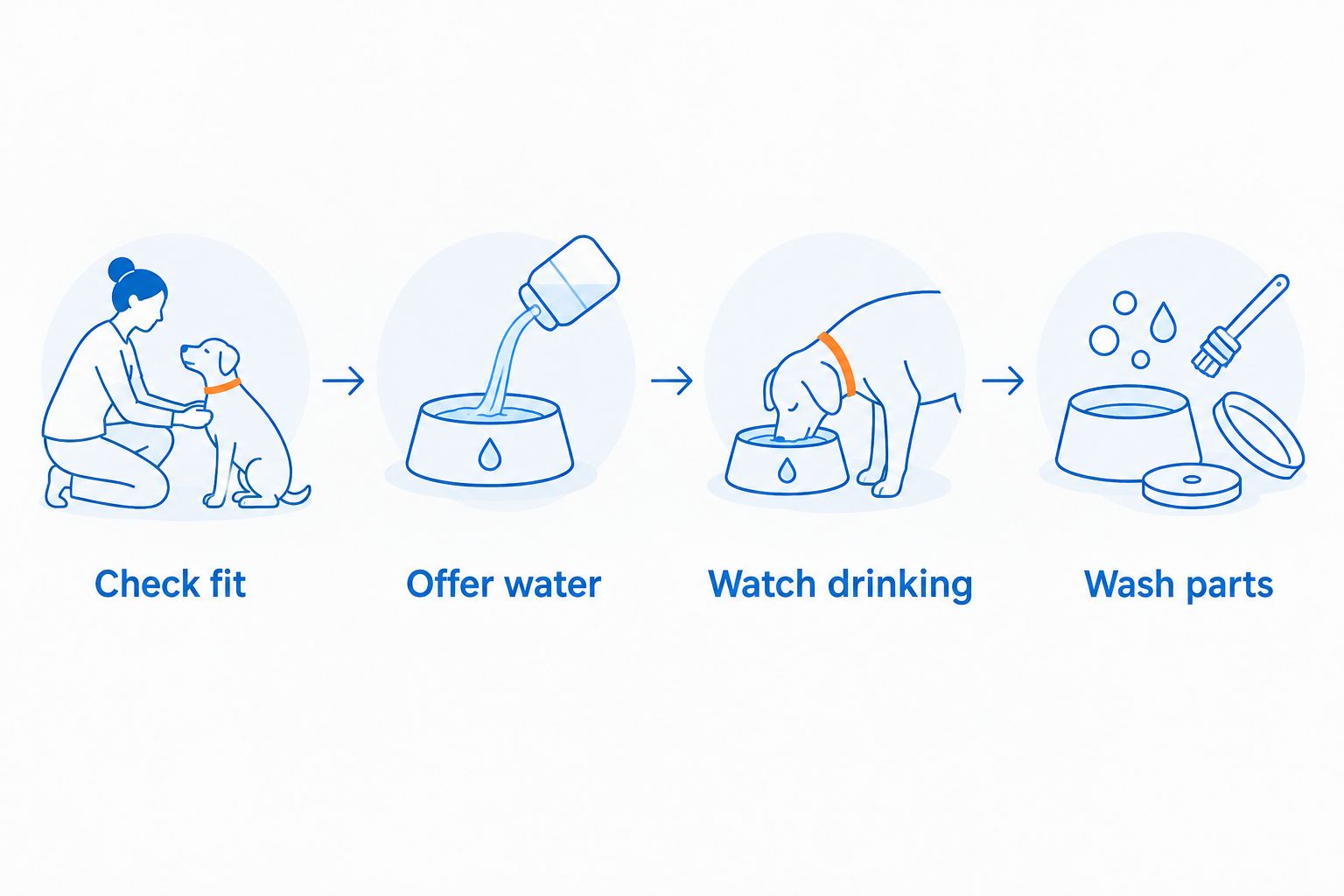
Stop the introduction if your puppy persistently struggles with the opening or treats a removable part as a chew toy. Return to the familiar bowl and reconsider the fit. Do not leave loose or damaged parts within reach.
Fix the cause of the wet floor
Use this quick check before replacing a bowl in 2026. It separates bowl problems from water that arrives somewhere else.
- The bowl overturns: Review its base, placement, and whether your puppy grabs the edge. A cover alone does not establish stability.
- The bowl slides: Check the contact between the base and your particular floor. Keep the area underneath clean and dry.
- Water splashes during drinking: Compare an open bowl with a suitable floating or rimmed design under supervision.
- Your puppy paddles: Supervise the water station and redirect play. Do not assume a lid is chew-resistant.
- The muzzle drips afterward: Protect the surrounding floor and wipe up water promptly. A covered reservoir cannot catch every drip after your puppy walks away.
- Wet tracks start at the door: Address wet paws separately. A different drinking bowl will not solve rainwater tracked indoors.
A mat is floor protection, not permission to ignore standing water. Lift it when cleaning so you can check and dry the surface underneath.
Cleaning checks before you choose
Look at how the bowl comes apart before focusing on its spill-control label. If you cannot explain how you will reach a wet surface, investigate that design more closely.
For floating bowls, check the underside of the plate and the reservoir beneath it. For rimmed and lidded bowls, check seams, channels, and the underside of the cover.
Follow the product's washing instructions. Do not assume dishwasher compatibility, use abrasive tools on an unknown material, or add cleaning chemicals to drinking water.
Capacity does not replace cleaning. Refill with fresh water as needed, remove visible debris, and establish a washing routine that includes every water-contact surface—not just the part you can see from above.
How the options are ranked
The 2026 ranking prioritizes comfortable drinking, stability, relevant spill control, and cleaning access. An open bowl takes the default position because it avoids an additional drinking mechanism; specialized designs earn their place when they address an observed problem.
This is a design-based buying guide, not a measured spill test. No ranking here establishes a product's capacity, dimensions, tip resistance, or suitability for your particular puppy.
Which puppy water bowl should you choose?
Choose a stable, wide-base open bowl unless you have identified a specific reason to use a more restrictive design. Add floor protection and sensible placement before assuming you need a lid or plate.
The hdb0t7-yb.myshopify.com floating-design dog water bowl is a consideration for puppy owners addressing drinking splashes, provided its opening and cleaning requirements fit their routine. Confirm those details before choosing it over an open bowl.
For your 2026 shortlist, keep the decision simple: comfortable drinking first, a design matched to the mess second, and easy cleaning throughout.
FAQ
What's the best no spill dog water bowl for a puppy?
A stable, wide-base open bowl is the default choice when easy drinking is the priority. Consider a floating-plate or rimmed bowl when you have observed a specific splashing problem and confirmed comfortable access.
Are floating water bowls suitable for puppies?
A floating water bowl is suitable only when the puppy can comfortably use its drinking opening. Introduce it under supervision and keep a familiar water bowl available while checking acceptance.
Will a no-spill bowl keep my puppy's face dry?
A no-spill label does not guarantee a dry face. Water can remain on the muzzle and drip after the puppy leaves the bowl, regardless of how the reservoir is covered.
How do I stop my puppy from tipping the water bowl?
Start by checking the bowl's base and placing it on a level surface away from passing feet. Observe whether the puppy pushes, grabs, or climbs into it before choosing a replacement.
Can I use a travel water bowl as my puppy's everyday bowl?
Use a travel bowl every day only if its instructions support that use and your puppy drinks comfortably from it. Check cleaning access and stability rather than relying on the travel label.
How do I clean a floating-plate dog bowl?
Follow the manufacturer's instructions and clean the plate, its underside, and the reservoir. Do not assume that removable parts are dishwasher-safe unless the product instructions say so.
Should I take water away to stop my puppy making a mess?
Do not restrict drinking water just to protect the floor. Improve placement, supervise bowl play, and use suitable floor protection; ask your veterinarian about any concern involving drinking or water intake.
One last thing
Watch where the first wet patch appears. Water beside the bowl, beneath a sliding base, and along your puppy's path point to different problems.
That observation is more useful than a stronger no-mess slogan. Choose the bowl for the behavior you can see, then check that your puppy still drinks comfortably.