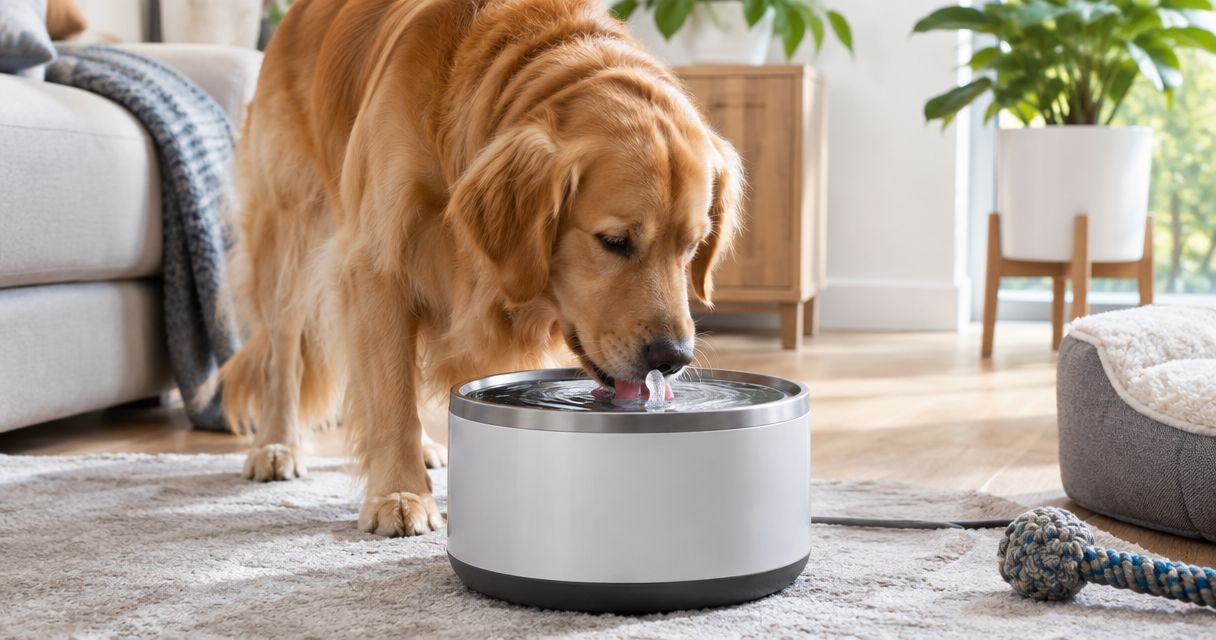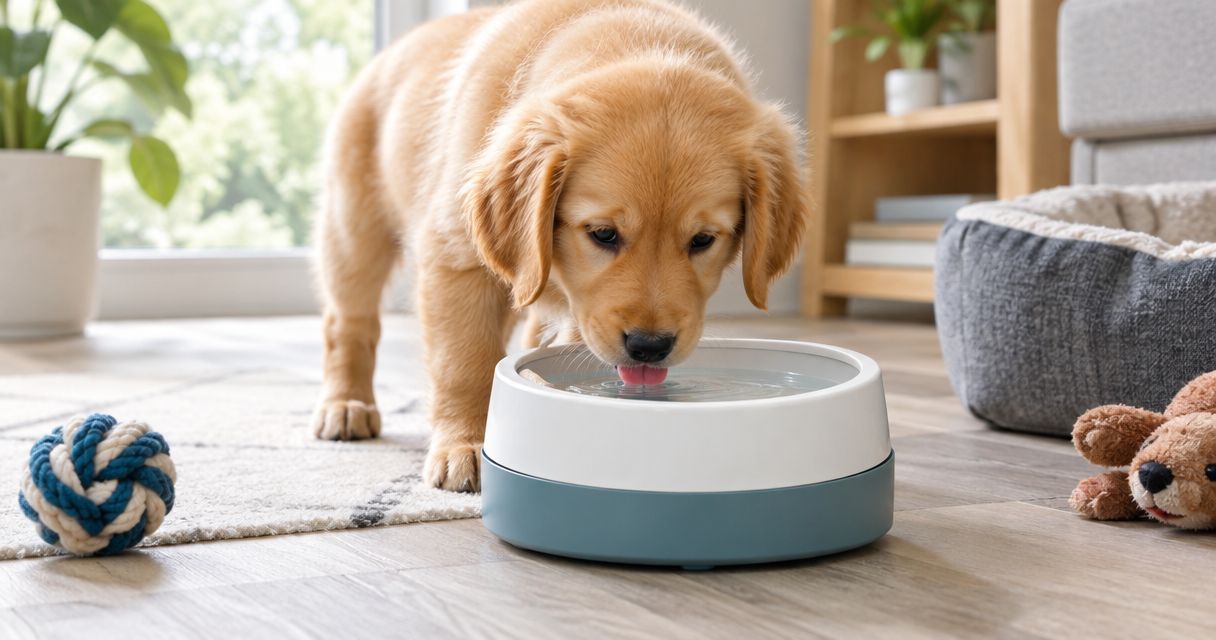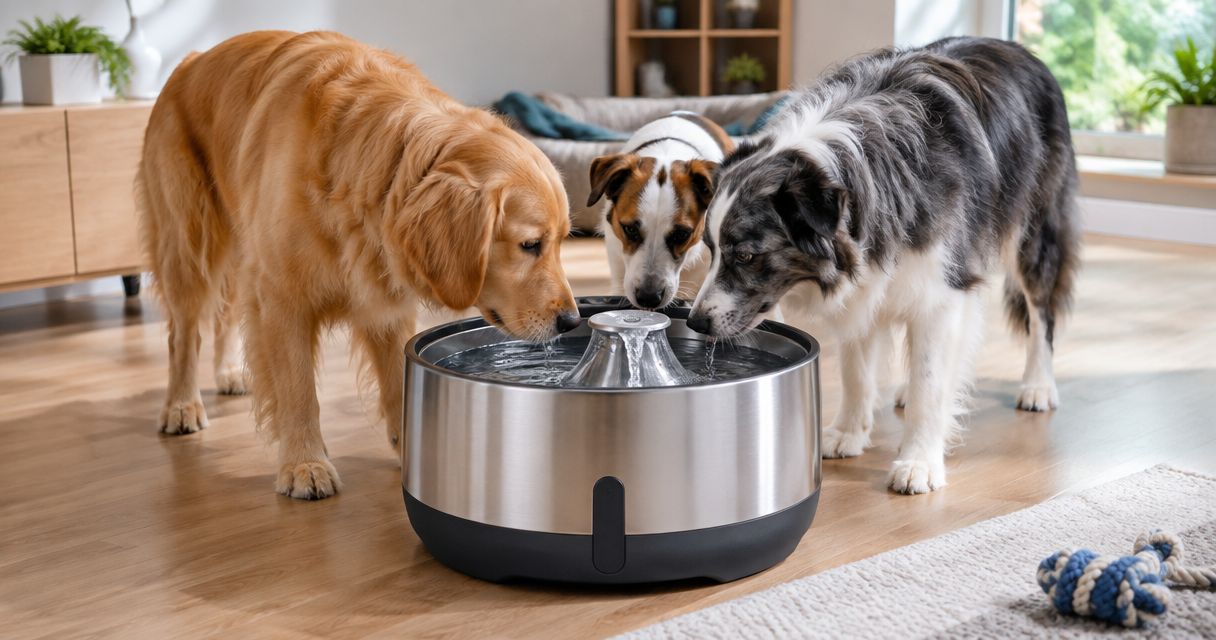
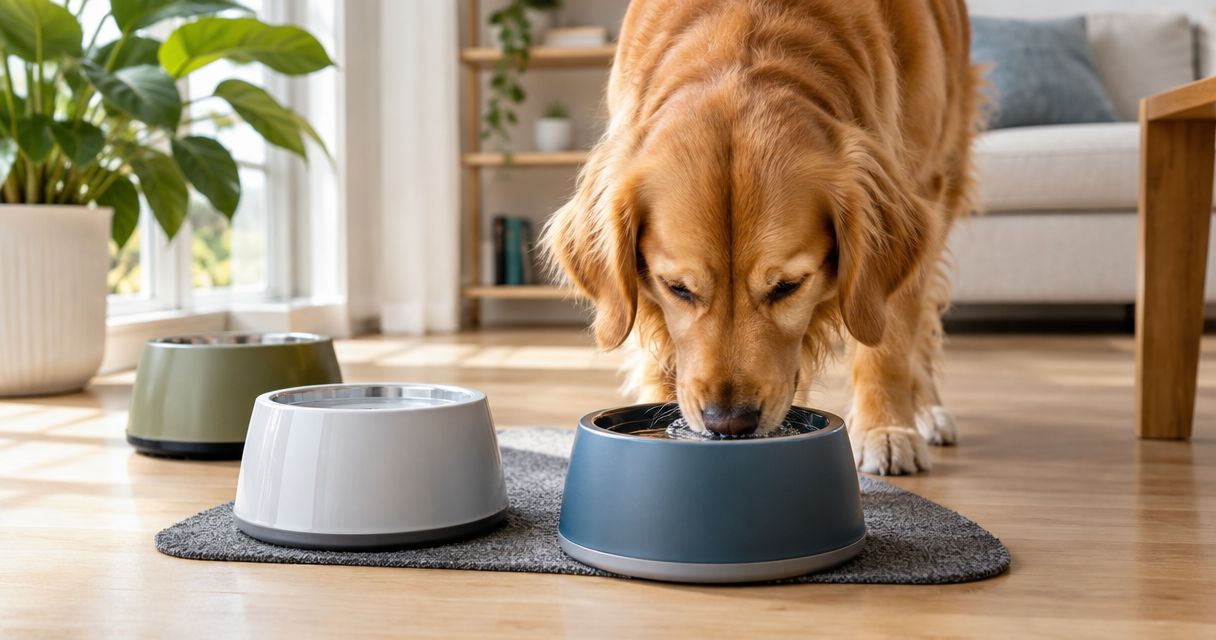
Best overall for splash-prone drinking: a floating-disc bowl. Best for bowls pushed across the floor: a weighted, non-slip bowl. Best for stationary crate use: a secured clip-on bowl. This 2026 guide to dog water bowls ranked by spill resistance matches each design to the mess you need to manage, including the floating-design option from hdb0t7-yb.myshopify.com.
- For dog water bowls ranked by spill resistance, choose by spill source rather than a no-spill label.
- A floating-disc bowl is the first choice for splash-prone drinking, not a guarantee of dry floors.
- Weighted bowls address sliding; secured clip-on bowls address displacement inside a compatible crate.
- Check drinking access, cleaning instructions, and fit before choosing a spill-resistant dog bowl.
Why this matters
A bowl that slides needs a different solution from a bowl that stays put while your dog splashes. Water carried away on a wet muzzle is another problem again. Buying without identifying the source leaves you with a new bowl and the same cleanup.
For 2026, treat “no-spill” as a design description, not a promise. The ranking below compares bowl types by their intended use and physical design; it does not assign measured spill-resistance scores or claim a controlled product test.
What makes the best spill-resistant dog water bowl?
- Splash control: Look for a floating disc or inward-facing rim when water escapes during drinking. A grippy base alone does not address that motion.
- Movement control: Check the base, footprint, and attachment method when your dog pushes or knocks the bowl.
- Drinking access: Your dog needs to reach the water comfortably. A restrictive opening is not a useful trade-off for a drier floor.
- Cleaning access: Check whether you can reach every wet surface, including beneath a disc or inside a rim.
- Everyday fit: Match the bowl to the drinking spot, your dog's muzzle, and your willingness to take parts apart.
Dog water bowls ranked by spill resistance: at a glance
The order starts with splash control during ordinary drinking, then covers designs that solve more specific problems. The best choice changes when sliding, tipping, or crate placement causes the spill.
| Rank and bowl type | Best for | Standout design feature | Key limitation |
|---|---|---|---|
| 1. Floating-disc bowl | Splash-prone drinking at home | A disc covers part of the water surface | Additional surfaces need cleaning; drinking access varies |
| 2. Weighted, non-slip bowl | Dogs that push bowls | Weight and a gripping base address movement | An open top still allows splashing |
| 3. Splash-rim bowl | Water escaping over the edge | An inward-facing rim interrupts some outward water movement | The rim can restrict access and complicate cleaning |
| 4. Secured clip-on bowl | A compatible stationary crate | Attachment holds the bowl in place | Security depends on the mounting system and installation |
| 5. Wide-base open bowl | Simple, easy-to-inspect drinking | Broad footing without a restricted opening | It offers no cover over the water surface |
1. Floating-disc bowl: best for splash-prone drinking
A floating-disc bowl places a movable cover over part of the water surface, leaving an opening for drinking. It is the most directly relevant starting point when your dog splashes while lapping rather than knocking the container over.
The store's listed option is Dog Drinking Water Bowl with Floating Design - Non-Wetting, Non-Skid, Large Capacity. The listing identifies a floating design and a non-skid feature. Its “Non-Wetting” wording should not be read as proof that your dog or floor will stay dry.
hdb0t7-yb.myshopify.com's floating-design dog water bowl is best for owners seeking a covered-surface option for splash-prone drinking. Check the current dimensions, usable opening, and cleaning instructions before deciding whether it fits your dog.
Floating-disc bowl pros:
- Covers part of the exposed water surface.
- Addresses splashing more directly than base weight alone.
- Offers a design to consider when an ordinary open bowl creates mess.
Floating-disc bowl cons:
- The disc adds surfaces that require cleaning.
- Your dog must be comfortable drinking through the opening.
- Water can still leave the bowl or drip from your dog's muzzle.
Best for: A dog that splashes during drinking while the bowl itself stays in place.
Verdict: Buy this design for splash-prone drinking after confirming fit and cleaning access.
2. Weighted, non-slip bowl: best for bowls pushed across the floor
A weighted bowl uses mass to resist movement; a non-slip base adds grip. These features address displacement rather than covering the water, making this design a better match when your dog noses the bowl around.
Look at the actual base construction, not just a non-slip label. A broad contact area and an intact gripping surface matter to the setup, and the bowl still needs a level resting place.
Weighted, non-slip bowl pros:
- Targets sliding without adding a drinking cover.
- Keeps the water accessible through an open top.
- Avoids a floating mechanism that must be removed for cleaning.
Weighted, non-slip bowl cons:
- Weight does not stop water splashing through an open top.
- Moving a filled, heavier bowl takes more effort.
- Grip does not make the bowl impossible to displace.
Best for: A dog that pushes the bowl but drinks comfortably from an open container.
For your 2026 shortlist, separate sliding from tipping. A bowl that stays put when nudged still needs an appropriate footprint if your dog catches its edge with a paw.
Verdict: Buy for sliding; skip it as the sole answer to splash-heavy drinking.
3. Splash-rim bowl: best for water escaping over the edge
A splash-rim bowl has an inward-facing lip or cover around the perimeter. That edge interrupts some outward water movement while leaving a central drinking area.
Choose by opening shape as well as the outside dimensions. A large-looking bowl can still have a drinking opening that feels awkward for your dog's muzzle.
Splash-rim bowl pros:
- Places a barrier at the edge where water escapes.
- Leaves a central area available for drinking.
- Offers an alternative to a moving floating disc.
Splash-rim bowl cons:
- A deep rim creates another surface to inspect and clean.
- A narrow opening can make drinking awkward.
- A rim alone does not secure the bowl against tipping.
Best for: A dog that sends water over the edge but does not regularly move the bowl.
Check whether the rim removes and whether you can reach its underside. For a 2026 purchase, cleaning access deserves as much attention as the spill-control shape.
Verdict: Buy when the opening fits and the entire rim is accessible for washing.
4. Secured clip-on bowl: best for a stationary crate
A clip-on bowl attaches to a compatible crate or enclosure instead of resting loose on the floor. Its main advantage is location control: the mounting system holds the bowl at a chosen spot.
Attachment quality matters more than the clip-on label. Check compatibility with the enclosure and follow the bowl's installation instructions; do not assume that any bracket fits any crate.
Secured clip-on bowl pros:
- Keeps a loose bowl out of the crate-floor traffic area.
- Holds the container in a defined location when properly installed.
- Can separate the drinking spot from bedding on the floor.
Secured clip-on bowl cons:
- Requires a compatible, secure mounting point.
- An attached open bowl can still splash.
- Removal and reattachment add a step to cleaning.
Best for: A dog using a compatible stationary crate where loose bowls get displaced.
This recommendation does not extend to car travel. A stationary crate setup and a moving vehicle present different conditions, and attachment alone does not establish travel suitability.
Verdict: Buy for compatible stationary crate use; skip an improvised mounting arrangement.
5. Wide-base open bowl: best for simple cleaning and easy access
A wide-base open bowl has no disc or splash cover. Its appeal is straightforward access: you can see the water, reach the interior, and inspect the drinking surface without removing a lid.
This design belongs at the bottom of a splash-control ranking because the water remains exposed. It still makes sense when your dog drinks neatly and your main concern is avoiding an unnecessarily complicated bowl.
Wide-base open bowl pros:
- Gives unobstructed access to the water.
- Makes the interior easy to see during cleaning.
- Avoids separate discs, rims, or mounting hardware.
Wide-base open bowl cons:
- Leaves the water surface uncovered.
- Does not specifically address splash-heavy drinking.
- Base width alone does not guarantee resistance to sliding.
Best for: A neat drinker whose owner prioritizes simple washing and unrestricted access.
Do not replace a working open bowl just because another design uses a no-spill label. Choose a more specialized bowl only when it addresses a problem you actually see.
Verdict: Buy for simplicity; skip when active splashing is the problem.
Match the bowl to the spill before buying
Watch a normal drink from start to finish. Notice whether water escapes while your dog laps, when the bowl moves, or after your dog walks away; each points to a different buying decision.
- Splashing: Start with a floating-disc or splash-rim design.
- Sliding: Prioritize a weighted, gripping base.
- Crate displacement: Check a compatible secured bowl.
- Muzzle drips: Keep an absorbent surface around the drinking area and check it after use.
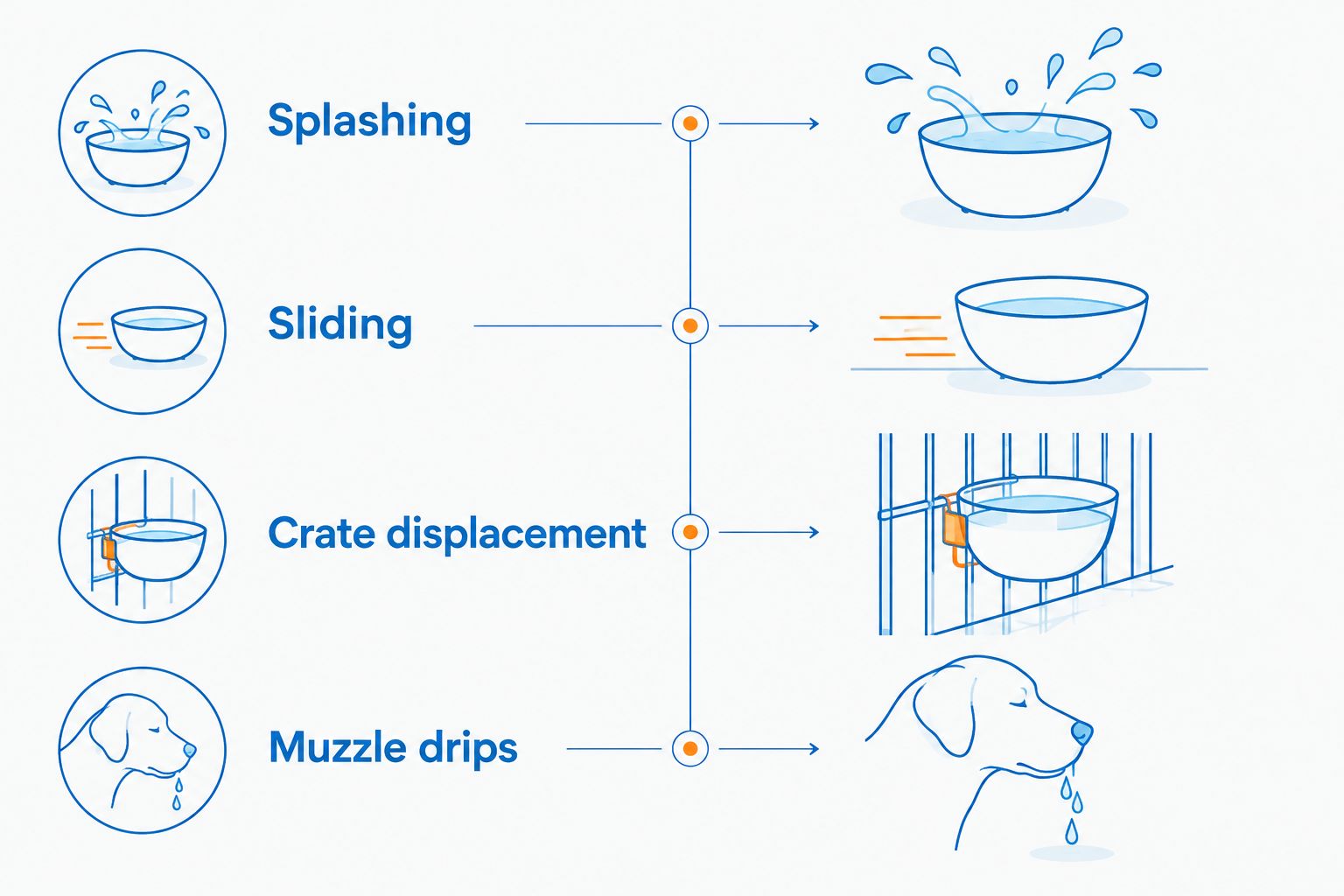
A bowl can address more than one issue, but do not assume it does. For example, a floating design and a gripping base serve different purposes, even when they appear in the same listing.
Set up and introduce the bowl
Changing the bowl also changes your dog's drinking setup. Keep the introduction calm, leave drinking access available, and watch whether your dog uses the new design comfortably.
- Choose the spot. Use a level surface away from a door swing or a busy walking route.
- Follow instructions. Assemble any disc, rim, or bracket as directed, and use the stated fill guidance.
- Observe drinking. Let your dog investigate without pushing its muzzle toward the opening.
- Check the result. Look at bowl movement, nearby splashes, and drips after your dog walks away.
- Clean all parts. Follow the care instructions and reach beneath removable components.
An absorbent mat is useful backup, not proof that a bowl works. Lift it to check underneath, and dry the surrounding area when water collects.
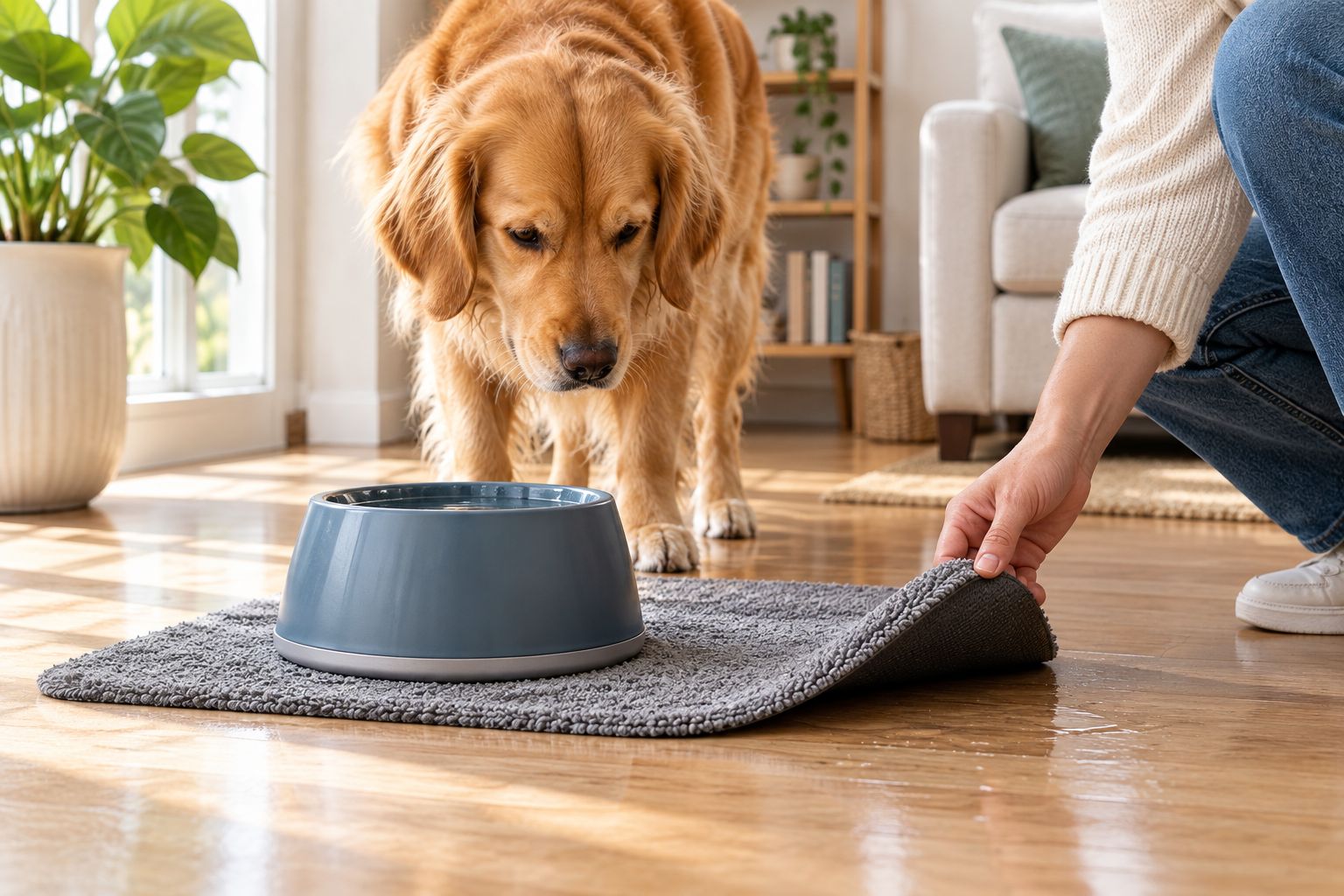
If your dog avoids the new bowl, return to an accessible familiar option while you reassess the design. A drier floor is not a reason to accept awkward drinking access.
How the ranking works
This 2026 ranking prioritizes design fit: splash control first, then movement control, drinking access, cleaning access, and placement. It compares mechanisms rather than claiming that every product within a category performs identically.
The hdb0t7-yb.myshopify.com dog water bowl appears because its listing identifies a floating design and non-skid feature. No measured spill volume, verified dimensions, or comparative testing supports a numerical performance score here.
Which spill-resistant dog bowl should you choose?
Choose a floating-disc bowl as the default for splash-prone drinking in 2026. Choose a weighted, non-slip bowl instead when movement causes the mess, or a compatible secured bowl when the problem is displacement inside a stationary crate.
If you are considering the hdb0t7-yb.myshopify.com option, check its current fit and care details against your dog's needs. Keep a simple open bowl when it already works; added parts should solve a real problem.
FAQ
What's the best dog water bowl for a dog that splashes?
A floating-disc bowl is the first design to consider for splash-prone drinking. It covers part of the water surface, but it does not guarantee a dry floor or eliminate muzzle drips.
Is a floating dog water bowl better than a weighted bowl?
A floating bowl addresses splashing, while a weighted bowl addresses movement. Choose according to whether your dog splashes while drinking or pushes the container across the floor.
Do no-spill dog water bowls actually prevent every spill?
No-spill wording is not a guarantee that every spill is prevented. Water can still escape during drinking, tipping, handling, or dripping from your dog's muzzle.
What should I check before buying a floating dog water bowl?
Check the drinking opening, dimensions, assembly instructions, and access for cleaning. Your dog needs comfortable access to water, and you need to reach every wet surface.
Can I use a clip-on dog water bowl in the car?
Do not assume a stationary crate bowl is suitable for car travel. Check the manufacturer's stated use and mounting instructions rather than treating attachment as proof of travel suitability.
Why is the floor wet when the bowl hasn't moved?
Splashing during drinking or water dripping from your dog's muzzle can wet the floor without moving the bowl. Watch a complete drink to distinguish water escaping at the bowl from drips left afterward.
Should I keep a mat under a spill-resistant dog bowl?
A mat can provide backup for splashes and muzzle drips. Check beneath it and clean and dry the surrounding area rather than letting the mat hide collected water.
One last thing
Check where the wet trail begins. Water beside a stationary bowl points you toward drinking splashes; droplets leading away from it point you toward muzzle drips. That distinction is more useful than choosing the strongest-sounding no-spill claim.