Best for a parked RV: a floating-design dog water bowl. Best for hiking: a collapsible bowl. Best for easy campsite cleaning: a plain stainless-steel bowl. Best for short stops: a water bottle with an attached drinking bowl. The best dog water bowls for RV and camping trips in 2026 depend on where your dog drinks—not just how neatly a bowl packs.
- The best dog water bowls for RV and camping trips match parked-RV, campsite, or trail use.
- Wags & Friends lists a floating-design dog water bowl worth considering for a parked RV.
- Choose a collapsible dog bowl when pack space matters; choose plain stainless steel when straightforward cleaning matters.
- No-spill wording is not a guarantee: secure water containers before driving and offer water during stops.
Why this matters
An RV floor, a picnic area, and a hiking trail ask different things of a dog bowl. A bowl that suits a fixed drinking station can be awkward to carry, while a folding bowl still needs a stable place to sit.
Wags & Friends sells a floating-design dog water bowl. That design belongs on your shortlist for a parked-RV drinking station, but it is not a substitute for securing water before the vehicle moves.
For your 2026 camping kit, separate drinking from transport. Carry water in a closed container, then choose a bowl your dog can use comfortably wherever you stop. That distinction is more useful than treating every product labeled travel-friendly as interchangeable.
What makes the best dog water bowls for camping?
Use these criteria before choosing a design:
- Drinking access: Your dog should reach the water without struggling with a narrow opening or unfamiliar component.
- Placement: Choose a bowl that sits level in the space you actually have—not just one that fits a cabinet.
- Spill management: Compare open water surfaces, rims, and floating components without assuming any design eliminates spills.
- Cleaning access: Look for surfaces you can reach and instructions you can follow with your camping supplies.
- Packing shape: Decide whether the bowl stays in the RV or travels in your daypack.
- Water transport: Check whether the item carries water or merely provides somewhere to pour it.
Buy for your routine first, then compare features. A folding shape does not make a bowl stable, and a non-skid description does not make it secure during braking.
Dog water bowls at a glance
These are use-case recommendations, not a tested spill-resistance ranking. The named product has a verified floating-design listing; the other entries describe bowl types to compare.
| Rank and option | Best for | Standout feature | Key limitation |
|---|---|---|---|
| 1. Dog Drinking Water Bowl with Floating Design - Non-Wetting, Non-Skid, Large Capacity | Parked-RV drinking station | Listed floating design | Product wording does not establish spill-proof performance |
| 2. Collapsible dog bowl | Hiking and daypack use | Folding form for packing | Still needs level placement and a separate water supply |
| 3. Plain stainless-steel dog bowl | Campsite cleaning | Simple, accessible bowl interior | Open water surface remains exposed to splashing |
| 4. Water bottle with attached drinking bowl | Short roadside stops | Water container and drinking vessel together | Drinking access and cleaning depend on the design |
1. Floating-design bowl: best for a parked RV
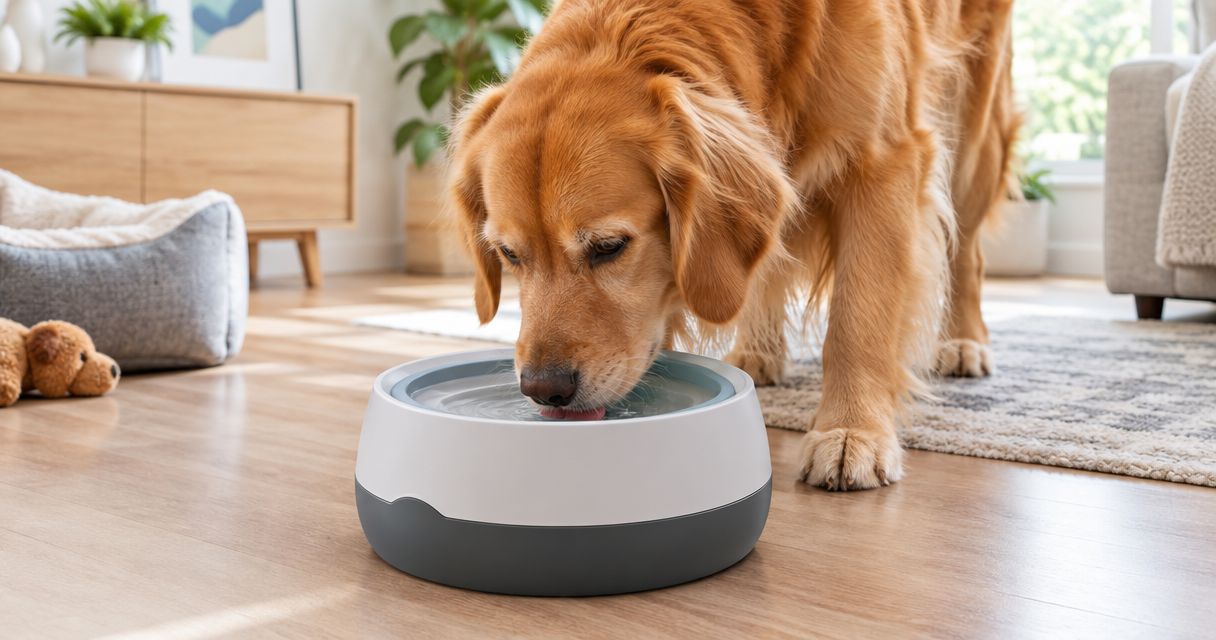
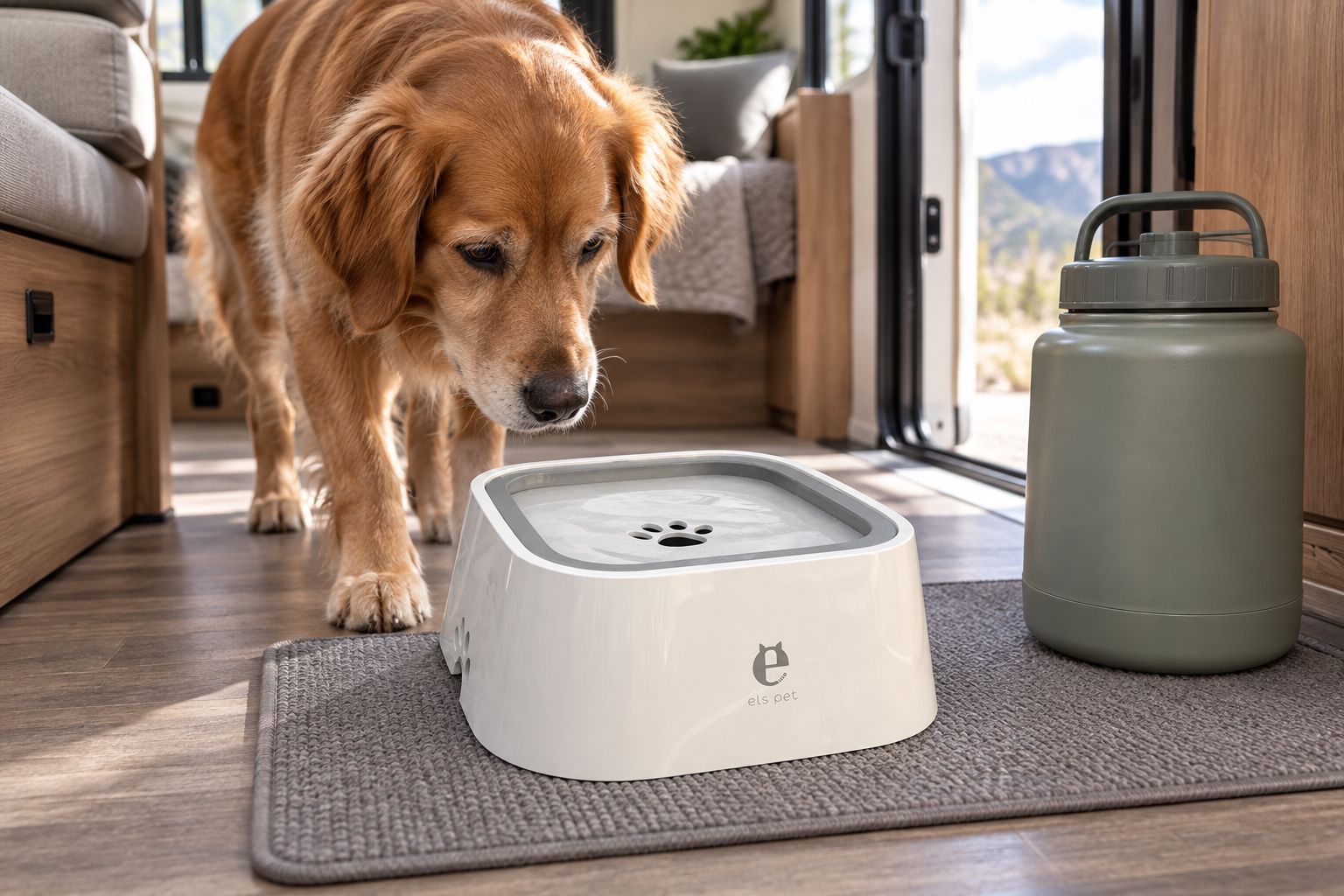
The Dog Drinking Water Bowl with Floating Design - Non-Wetting, Non-Skid, Large Capacity is the named option to consider when your dog's bowl stays in the RV. Its listing identifies a floating design and describes a non-skid base. Those are useful features to investigate, not proof that your floor will stay dry.
Wags & Friends' floating-design dog water bowl is a shortlist option for owners setting up a parked-RV drinking station. Before choosing it, check the assembled dimensions, drinking opening, and cleaning directions against your available space and your dog's drinking habits.
Watch your dog try the bowl at home before your 2026 departure. Keep the familiar bowl nearby rather than making the trip the first introduction to a different drinking surface.
Floating-design bowl pros:
- Listed floating design gives you an alternative to a fully open bowl.
- Suits a dedicated drinking-station setup rather than a folding-bowl routine.
- Listed non-skid feature gives you a specific detail to check on your floor surface.
Floating-design bowl cons:
- The floating component adds a surface to keep clean.
- The product name does not establish travel security or zero-spill performance.
- Your dog still needs to accept the drinking opening.
Best for: Owners who want a dedicated bowl inside a parked RV.
Verdict: Buy for a fixed drinking station only after checking fit; skip it as an unsecured bowl while driving.
2. Collapsible dog bowl: best for hiking
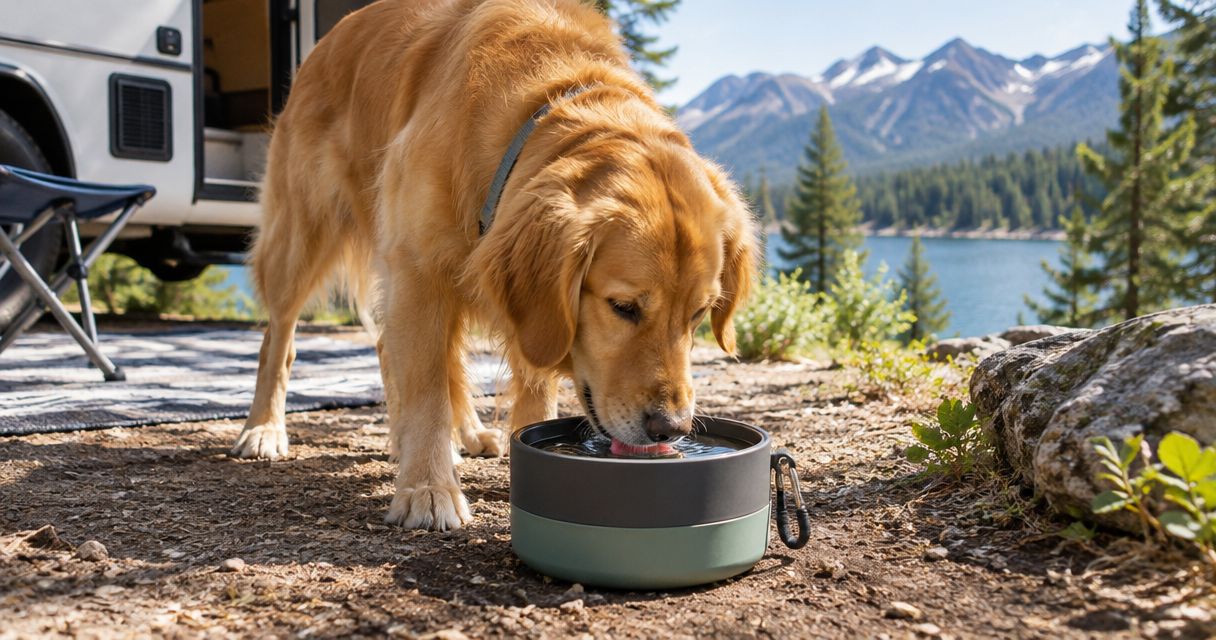
A collapsible dog bowl folds down for carrying between drinking stops. It makes sense when you leave the campsite on foot and want the bowl inside a pack rather than occupying a fixed floor spot.
Choose an opening your dog can use comfortably, then inspect how the bowl stands when expanded. A folding wall is a packing feature—not evidence that the bowl resists tipping or holds water securely in a moving vehicle.
Practice opening, filling, emptying, and packing the bowl before taking it out. Check the folds during washing, and let the bowl dry before putting it away for storage.
Collapsible bowl pros:
- Folding form suits a daypack.
- Separates the drinking vessel from your water container.
- Can serve as a backup beside your regular campsite bowl.
Collapsible bowl cons:
- Folded surfaces need attention during cleaning and drying.
- You must carry water separately.
- Uneven ground still creates placement problems.
Best for: Walks and hikes where carrying space matters more than leaving a bowl out.
Verdict: Buy for packability; skip it as your answer to driving spills.
3. Plain stainless-steel bowl: best for campsite cleaning
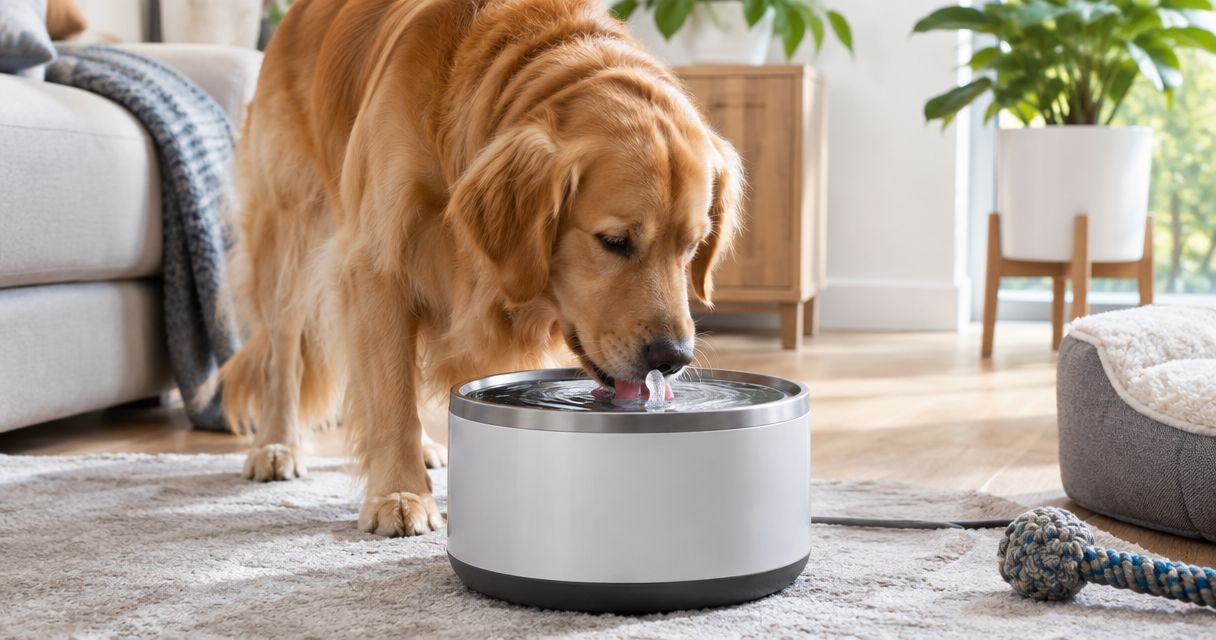
A plain stainless-steel bowl keeps the drinking setup simple. An open interior lets you see and reach the surface during washing, without a floating component or folding walls.
For a stationary campsite, that simplicity is a useful trade-off. Choose the bowl's shape and base deliberately: stainless steel describes the material, not its resistance to sliding or tipping.
Put the bowl on firm, level ground away from the main walking route. If you already own a suitable bowl, try that setup before adding another travel-specific item to your 2026 packing list.
Stainless-steel bowl pros:
- Open interior is accessible for washing.
- No unfamiliar drinking mechanism for your dog to learn.
- Straightforward shape makes debris easy to spot.
Stainless-steel bowl cons:
- The open surface does not control splashing.
- A plain bowl does not transport water securely.
- Base grip varies by the specific bowl.
Best for: Owners who prioritize simple washing at a stationary campsite.
Verdict: Buy for straightforward campsite use; skip if controlling an exposed water surface is your main requirement.
4. Bottle with attached bowl: best for short roadside stops
A water bottle with an attached drinking bowl combines water storage and a place to drink. Compare the actual design: some provide a separate cup, while others use a shaped drinking section connected to the bottle.
This option suits a stop where you unpack water, offer a drink, and pack everything away again. It does not replace a comfortable drinking station when your dog is spending time at camp.
Check that you can reach every water-contact surface for cleaning. Also check how the container closes, because an attached bowl does not by itself establish that the bottle seals securely.
Bottle-and-bowl pros:
- Keeps the water container and drinking vessel together.
- Gives you a defined item to grab at a rest stop.
- Avoids searching separately for a packed bowl.
Bottle-and-bowl cons:
- Drinking space varies by design.
- Closures and water channels need cleaning attention.
- A compact drinking section is not automatically suitable for every dog.
Best for: Brief roadside breaks where you offer water and pack up afterward.
Verdict: Buy for a convenient stop routine; skip as the only drinking setup for an extended campsite stay.
How we ranked these options
The order follows use, not an unsupported claim that one bowl outperforms every other bowl. The floating-design option comes first for a parked RV, followed by packability, cleaning simplicity, and short-stop convenience.
For this 2026 guide, the deciding criteria are drinking access, placement, spill management, cleaning, packing shape, and water transport. No driving-spill test, measured capacity comparison, or product endurance result forms part of this ranking.
Set up a drinking stop without creating extra cleanup
Use the same short routine at roadside breaks and camp. Consistency makes it easier to notice a poorly placed bowl or a design your dog avoids.
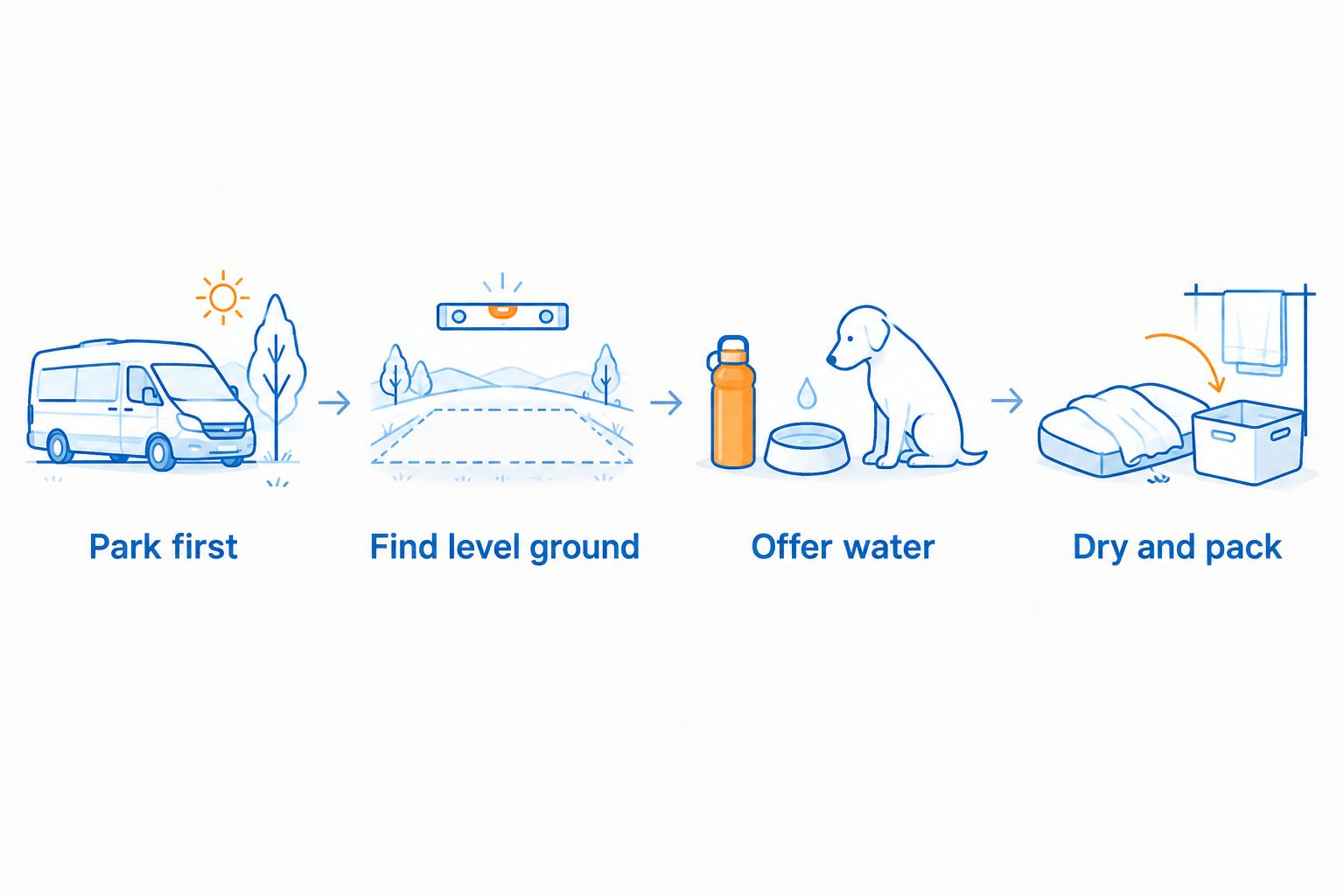
- Park first. Secure the vehicle before setting out an open drinking bowl. Do not treat a floating plate or raised rim as cargo restraint.
- Find level ground. Choose a firm surface outside the main footpath. Inside the RV, keep the bowl away from steps and electrical equipment.
- Offer water. Use water suitable for drinking and watch whether your dog can access it comfortably. Keep your familiar backup ready.
- Dry and pack. Empty the bowl before driving, wipe up surrounding water, and secure the bowl and closed water container.
A mat gives you a defined cleanup area; it does not fix an unstable bowl. If the bowl rocks, slides, or blocks a walkway, change the placement before blaming the drinking design.
What to pack alongside your bowl
For a starting checklist, pack 2 bowls: your chosen travel bowl and a familiar backup. This is a packing recommendation, not a statement about how much water your dog needs.
Add 1 dedicated drying towel so you can wipe the bowl and nearby floor before departure. Keep it separate from the towel you use for muddy paws.
Include 1 closed water container as a transport item, then adjust your water supply to the trip and your dog's needs. A bowl's capacity is not a daily hydration plan.
For your 2026 departure check, rehearse the whole routine at home: retrieve the supplies, offer a drink, clean up, and pack away. If a component is awkward to wash in your kitchen, consider how you will manage it at camp.
Which dog water bowl should you choose?
Choose the bowl for the place your dog drinks most often. For a dedicated parked-RV station, consider the floating-design bowl from Wags & Friends after checking dimensions and drinking access. For hiking, choose a collapsible bowl; for simple campsite washing, choose plain stainless steel.
A bottle-and-bowl combination earns its place when short stops dominate your itinerary. It is a convenience choice, not an automatic replacement for the bowl your dog already uses comfortably.
The default for an undecided owner is simple: start with your familiar bowl at a level, stationary drinking spot. Change designs only when you can name the problem—packing bulk, difficult cleaning, awkward access, or splashing—that the replacement needs to address.
FAQ
What's the best dog water bowl for an RV?
A floating-design bowl is worth considering for a parked-RV drinking station. Check the dimensions, drinking opening, and cleaning instructions; do not treat it as secure for use while driving.
Can I leave a no-spill dog bowl full while driving?
Do not rely on no-spill wording to secure an open bowl during driving. Empty and stow the bowl, secure a closed water container, and offer water during stops.
Is a collapsible bowl better than stainless steel for camping?
A collapsible bowl suits packability, while a plain stainless-steel bowl suits straightforward campsite cleaning. Neither material or shape alone establishes stability or spill resistance.
Does the Wags & Friends floating dog water bowl guarantee dry floors?
The listed floating design does not establish a guarantee of dry floors. Placement, your dog's drinking behavior, and the bowl's fit still matter.
What should I check before buying a camping dog bowl?
Check drinking access, assembled size, base stability, cleaning access, and packing shape. Separately confirm how you will transport water, because a drinking bowl is not necessarily a sealed container.
Should I bring my dog's regular bowl on a camping trip?
Bring your dog's familiar bowl as a backup when introducing a different travel bowl. Try the new design at home before depending on it during the trip.
Can my dog drink straight from a campsite stream?
Bring water suitable for drinking rather than assuming untreated stream water is safe. Follow local water advisories and use the bowl with a water source you have checked.
One last thing
Check where the bowl goes after your dog finishes drinking. A design that works well on the floor still needs a practical place to dry and travel.
Before your next trip, choose that storage spot and try packing the bowl there. If you cannot secure it without leaving wet surfaces against other gear, change the storage routine—not necessarily the bowl.