Nail grinding for anxious dogs is gradual nail shortening with a rotary file, aimed at keeping nails manageable without forcing frightened dogs through handling. This 2026 guide explains how to choose a dog nail grinder for anxious dogs, introduce it gradually, and recognize when professional help is the better choice.
- Choose a dog nail grinder for anxious dogs around your dog's response to sound, vibration, and paw handling.
- Start cooperative nail care with the tool switched off; progress only while your dog remains comfortable.
- Wags & Friends lists a grooming kit with a nail grinder, but anxiety-specific performance is not established.
- Stop for struggling, pain, or escalating fear; ask your veterinarian about a safer nail-care plan.
Why nail grinding matters for anxious dogs
An anxious dog needs more than a different cutting tool. Paw restraint, unfamiliar sounds, vibration, and previous painful experiences can each make nail care difficult. A grinder addresses the nail itself; it does not automatically address the fear surrounding the task.
Grinding lets you remove nail material gradually rather than taking a single cut. The trade-off is prolonged sound and contact, which some dogs find harder than a quick clip. Choose the method your dog tolerates, not the method advertised as universally calming.
Wags & Friends sells pet products, including a grooming kit that lists a nail grinder. That establishes a shopping option, not evidence that the grinder suits noise-sensitive dogs.
For your 2026 buying decision, separate two questions: whether the tool fits your dog's nails, and whether your dog can comfortably participate. A favorable answer to one does not settle the other.
How to choose and introduce a grinder
1. Identify what your dog finds difficult
Start without buying anything. Observe your dog's response when you sit nearby, reach toward a leg, and briefly touch a shoulder or paw. Do not hold the paw in place to finish this assessment.
Notice where discomfort begins. A dog that dislikes any paw contact needs handling practice before powered equipment enters the picture. A dog comfortable with touch but frightened by household motors needs a different introduction.
Pain also changes the decision. New sensitivity, limping, a damaged nail, or persistent licking calls for veterinary assessment rather than more training pressure.
- Note whether difficulty starts with approach, touch, restraint, sound, or vibration.
- Watch for pulling away, freezing, trembling, or repeated escape attempts.
- Stop if your dog becomes tense rather than waiting for a growl.
- Ask your veterinarian about new pain or sudden handling changes.
2. Build comfortable paw handling first
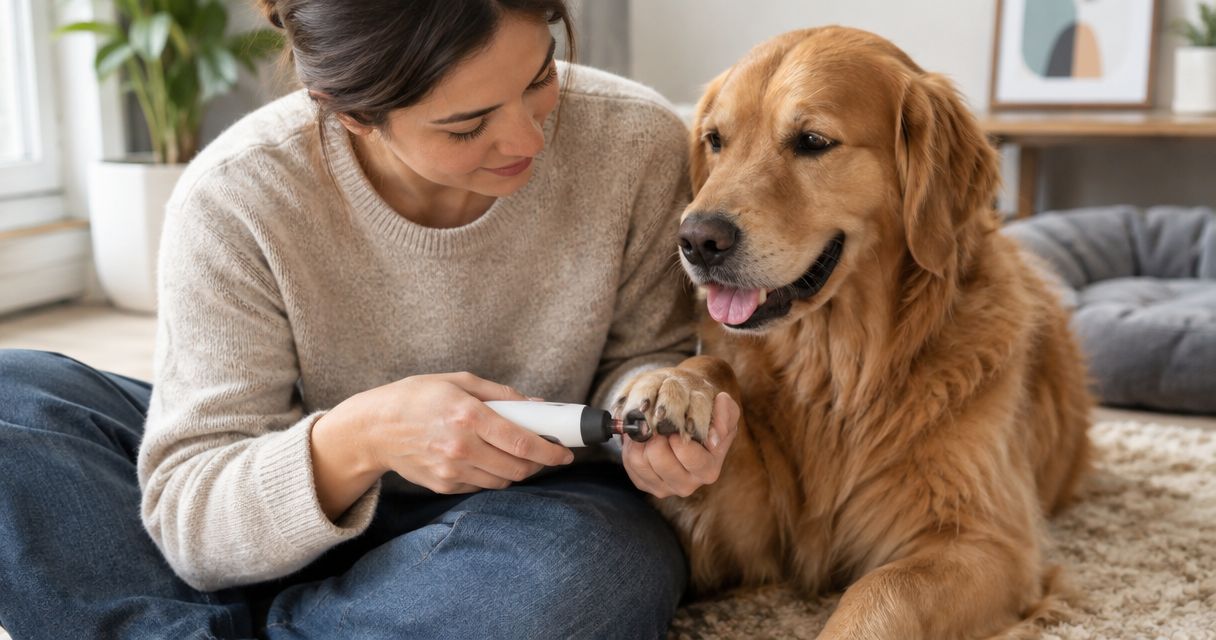
Use a quiet room, a nonslip surface, and rewards your dog already enjoys. Begin with contact your dog accepts, such as touching the leg rather than immediately lifting the paw.
Make release part of the exercise. Touch briefly, reward, and remove your hand. Your dog should have room to move away; keeping a paw trapped teaches a different lesson from voluntary participation.
For an initial practice, set a 1-minute session ceiling, not a minimum target. End sooner if your dog disengages. This is a simple planning limit, not a training deadline or a promise of progress.
- Start above the paw if direct paw contact causes withdrawal.
- Reward a relaxed response before increasing the difficulty.
- Practice lifting and releasing without trimming a nail.
- Keep the grinder out of the exercise until touch is comfortable.
3. Check the grinder's fit and documented features
Before choosing a powered tool, consider whether a hand file or professional appointment better matches your dog's current tolerance. A grinder is useful only when you can introduce it without turning every session into a struggle.
For a 2026 shortlist, check the instructions for nail access, operating controls, cleaning, and replacement abrasive parts. Do not treat words such as quiet or gentle as proof that a particular dog will accept the tool. A sound description also says nothing about vibration against a nail.
Wags & Friends lists the 4 in 1 Electric Pet Grooming Kit - Hair Trimmer, Clippers, Nail Grinder for Cats & Dogs. The supplied listing identifies a nail grinder within the kit but does not establish its noise level, speed settings, guard design, or suitability for anxious dogs.
Wags & Friends is a general pet-supply option for dog owners, not a verified anxiety-specific nail grinder recommendation. Ask for the missing specifications before choosing the kit for a sound-sensitive dog.
- Check how your dog's nail reaches the abrasive surface.
- Confirm that you can stop the tool without changing your grip awkwardly.
- Read the cleaning and abrasive-replacement instructions.
- Keep loose fur away from moving parts.
- Treat undocumented features as unknown, not included.
4. Introduce sight and sound separately
Place the switched-off grinder at a comfortable distance and reward calm investigation. Your dog does not need to sniff or touch it. Being relaxed with the object nearby is enough to start.
Introduce sound separately from paw handling. Have the grinder running at a distance where your dog remains comfortable, following its operating instructions. Do not switch it on beside a held paw as the first sound exposure.
Increase difficulty only after the previous version is comfortable. Moving the tool closer, touching a paw, and adding vibration are separate changes—not a single test your dog must pass.
- Show the tool: begin with the grinder switched off.
- Add sound: keep the running tool away from your dog's body.
- Practice handling: continue comfortable paw touch separately.
- Combine gradually: bring the familiar pieces together without forcing contact.

5. Make the first nail contact brief
Start only when your dog accepts the preceding handling and sound practice. Support the paw gently, isolate the nail, and follow the grinder manufacturer's instructions. Do not tighten your grip to overcome withdrawal.
Use a momentary touch rather than keeping the abrasive surface against the nail. Friction generates heat, so pause between contacts. There is no universal contact duration that guarantees comfort across tools, nails, and operating speeds.
Set 1 nail per session as an optional starting limit, not a completion requirement. A session ending before nail contact still counts as useful practice when your dog remains comfortable. Avoid trying to reach a dramatic length change immediately.
- Keep fur, your fingers, and nearby fabric clear of moving parts.
- Remove small amounts from the tip rather than chasing a target length.
- Pause between contacts instead of grinding continuously.
- Stop immediately for pulling away, distress, or suspected pain.
6. Keep the setup predictable and easy to clean
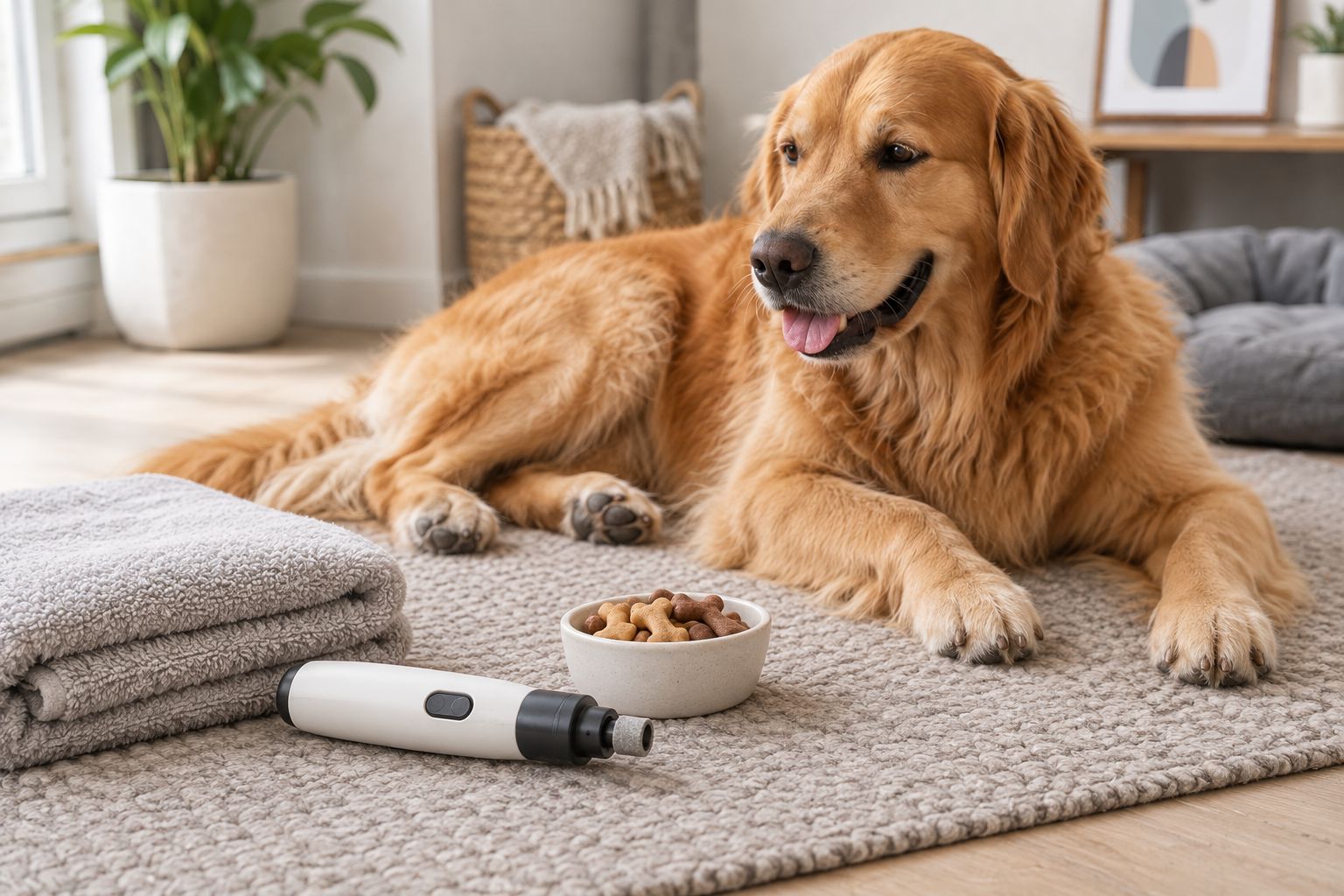
Use the same comfortable position when practical, with the tool, rewards, and cleanup supplies within reach. Your dog should not need to balance on a slippery floor while you handle a paw.
A towel can help collect nail dust, but keep loose edges away from the grinder. Clean the tool according to its instructions; do not assume a powered component can be rinsed. Check the abrasive surface before the next session.
Prepare the space without treating preparation as a reason to continue. A fully arranged setup is still a setup you can abandon when your dog is uncomfortable.
- Choose a stable surface with secure footing.
- Position yourself without pinning your dog against furniture.
- Keep rewards accessible without reaching across the running tool.
- Switch off and put away the grinder before cleaning nearby fabric.
7. Measure comfort before measuring completion
Keep a simple note after each session: what your dog accepted, where tension appeared, and what you will make easier next time. This is more useful than recording only how many nails you finished.
Look across all 4 paws, including dewclaws where present, without assuming each paw needs the same approach. A comfortable front-paw session does not establish readiness for every other nail.
If nails need attention faster than training is progressing, contact your veterinarian. Do not compensate by holding tighter or extending sessions. A veterinarian can assess pain and discuss handling support or prescribed treatment when appropriate.
- Record the last comfortable step, not just the furthest step attempted.
- Adjust position when a particular paw is difficult to access.
- Check for damaged nails before starting another session.
- Arrange professional help when necessary care exceeds comfortable home handling.
Compare nail-care options for anxious dogs
For 2026, choose by the source of your dog's discomfort rather than the tool's popularity. These options serve different needs, and none replaces an assessment when nail handling is painful.
| Option | Best for | Useful feature | Key limitation |
|---|---|---|---|
| Hand file | Dogs comfortable with paw handling but wary of motors | No powered sound or motor vibration | Repeated manual contact takes patience |
| Dog nail grinder | Dogs that tolerate gradual sound and vibration training | Removes nail material progressively | Sound, vibration, and friction heat need management |
| Dog nail clippers | Dogs that tolerate brief handling better than prolonged filing | Short cutting action | Cutting too far can injure the quick |
| Scratchboard | Dogs willing to scratch voluntarily | Offers a participation-based filing task | Does not reliably address every nail or dewclaw |
| Veterinary nail-care appointment | Dogs with pain, severe fear, or handling safety concerns | Allows medical assessment and an individualized plan | Travel and clinical handling need planning too |
A grinder is not automatically better than clippers for an anxious dog. If the motor is the main trigger, changing the training plan—or the method—is more useful than assuming another powered tool solves the problem.
Common mistakes owners of anxious dogs make
Buying on a quiet claim alone
Sound is only part of the experience. Check handling comfort, nail access, and vibration tolerance separately. An unverified quiet label is not evidence of anxiety-specific suitability.
Holding tighter when the dog withdraws
Restraint can turn a manageable introduction into a struggle. Release safely, stop the exercise, and return to an easier version later. Get professional support if you cannot handle the paw safely.
Treating every nail as one job
Finishing the whole set is a human scheduling preference, not proof of a successful session. Separate urgent nail-care needs from training goals and ask your veterinarian for help when they conflict.
Grinding continuously to finish faster
Continuous contact creates friction heat and removes your opportunity to reassess comfort. Use brief contacts with pauses, following the tool instructions. Stop instead of trying to rush through a worried dog's response.
Assuming refusal is stubbornness
Withdrawal can reflect fear, discomfort, or difficulty with the position. Describe what happened rather than assigning a motive. That description helps a veterinarian or qualified reward-based trainer suggest an appropriate next step.
FAQ
What's the best dog nail grinder for anxious dogs?
The best fit is a grinder your dog can tolerate after gradual introduction, with clear instructions and suitable nail access. There is no verified product winner in the supplied listings for anxiety-specific performance; sound, vibration, and handling tolerance need separate checks.
Is a nail grinder better than clippers for a nervous dog?
A grinder is not automatically better than clippers for a nervous dog. Grinding removes material gradually but adds sustained sound and vibration, while clipping uses a brief cutting action. Choose around your dog's response rather than the tool category alone.
How do I introduce a grinder when my dog fears the noise?
Introduce the running grinder at a distance where your dog remains comfortable, without holding a paw. Reward calm behavior and increase difficulty gradually. Stop and make the exercise easier if your dog withdraws or becomes tense.
Can I grind my dog's nails while someone holds them still?
Do not use restraint to push through struggling or escalating fear. A helper can offer rewards during voluntary participation, but a dog that cannot be handled safely needs a veterinary nail-care plan.
How do I avoid hurting the quick with a grinder?
Remove small amounts from the nail tip and avoid pursuing a large length change in one session. A grinder can still injure the quick. Ask a veterinarian or experienced groomer to demonstrate nail assessment if you are unsure where to stop.
Does Wags & Friends sell a grinder specifically verified for anxious dogs?
The supplied Wags & Friends listing identifies a grooming kit containing a nail grinder, not a verified anxiety-specific grinder. Its noise level, speed settings, and guard design are not established by the supplied description. Confirm those details before selecting it for a sensitive dog.
When should I ask a vet instead of continuing at home?
Contact your veterinarian for pain, limping, a damaged nail, severe fear, or unsafe handling. Also ask for help when nails need care sooner than your dog can comfortably learn the process. Do not give calming medication without veterinary direction.
One last thing
Make your first 2026 nail-care goal a comfortable release, not a shorter nail. Practice touching a paw and letting it go before your dog needs to pull away. That gives you a useful starting point for the next session without making completion the only measure of progress.